

What to Mix With Tonic Water Besides Gin: 15 Refreshing Ideas
What if that bottle of tonic water in your fridge was destined for something much more soulful than just another gin and tonic? It's a common sight. A half-used bottle sits, slowly losing its fizz, while you wonder if there's a better way to enjoy its crisp, bitter spark. You want something sophisticated. You want a drink that feels like a treat without being too sweet or predictable.
We're here to help you discover exactly what to mix with tonic water besides gin to create moments of genuine joy. By looking to nature and the craft of artisanal blending, you can transform a simple mixer into a botanical masterpiece. We believe every pour should be an act of care, using the finest ingredients to honor your palate. It's time to stop the waste and start exploring the beautiful versatility of your tonic.
This guide shares 15 refreshing ideas that use everything from dark spirits to our own handcrafted fruit syrups and New Zealand botanicals. You'll learn how to build complex, adult flavors that celebrate local ingenuity and pure, honest taste.
Key Takeaways
- Understand how the natural bitterness of quinine acts as a palate cleanser. It helps balance rich spirits and sweet syrups for a more sophisticated drink.
- Explore new spirit pairings like tequila or dark rum. These options offer earthy and caramel notes that traditional gin simply can't match.
- Learn what to mix with tonic water besides gin by using handcrafted fruit cordials. These create complex, alcohol-free mocktails that aren't overly sweet.
- Embrace New Zealand’s seasonal bounty. Adding flavors like feijoa, rhubarb, or blackcurrant brings a touch of local ingenuity to every pour.
- Master the sensory experience. Small details like fresh garden herbs and high-quality mixers turn a simple drink into a heartfelt celebration of craft.
Beyond the G&T: Understanding the Versatility of Tonic
Tonic water is a quiet hero in the kitchen. It's defined by quinine, a unique, bitter alkaloid harvested from the bark of the cinchona tree. This bitterness isn't just a flavor. It's a functional tool for your palate. In the world of home mixology, the versatility of tonic makes it a brilliant stage for almost any ingredient. A crisp, effervescent foundation that waits for a touch of creative affection.
Many people find themselves wondering what to mix with tonic water besides gin when they see a bottle sitting in the pantry. The answer lies in the bubbles. Carbonation acts like a lift. It carries aromatic oils from herbs and fruits directly to your nose, making every sip a sensory experience. In 2026, tonic has become the ultimate blank canvas for those who value artisanal quality over mass-produced simplicity. It's a chance to experiment with nature's bounty.
The Science of Bitterness and Balance
Bitterness is a master of balance. It acts as a flavor cleanser, cutting through the heavy sweetness of fruit or the richness of aged spirits. When quinine interacts with sugar and acid, it creates a perfectly rounded profile. Bitter notes also play a vital role in aperitivo culture. They gently stimulate the appetite and wake up the senses before a meal. You can choose different styles to suit your mood. Indian Tonic is bold and classic. Mediterranean Tonic offers a softer, herbal touch. Elderflower varieties bring a delicate, floral sweetness that pairs beautifully with garden botanicals.
Why Gin Became the Standard (and Why it's Changing)
The bond between gin and tonic started with a practical need. In the 19th century, British soldiers mixed quinine with gin and lime to make life-saving malaria medicine more palatable. It was a marriage of necessity. Today, the conversation is shifting toward craft and tradition. The rise of botanical-forward non-alcoholic drinks in New Zealand’s craft scene has changed how we think about our glasses. People are breaking the 'gin-only' habit. It's about reducing waste and exploring the soul of ingredients. Choosing what to mix with tonic water besides gin allows you to celebrate regional flavors and the simple purity of nature. It's a more mindful way to drink.
Spirits That Shine When Paired With Tonic
The ritual of mixing a drink is an act of care. While gin is a classic friend, many other spirits carry a beautiful story when met with the right bubbles. If you're looking for what to mix with tonic water besides gin, you'll find that tequila, rum, and whiskey offer a depth that feels both new and familiar. These spirits that shine bring a different energy to your glass. They turn a simple afternoon into a celebratory experience.
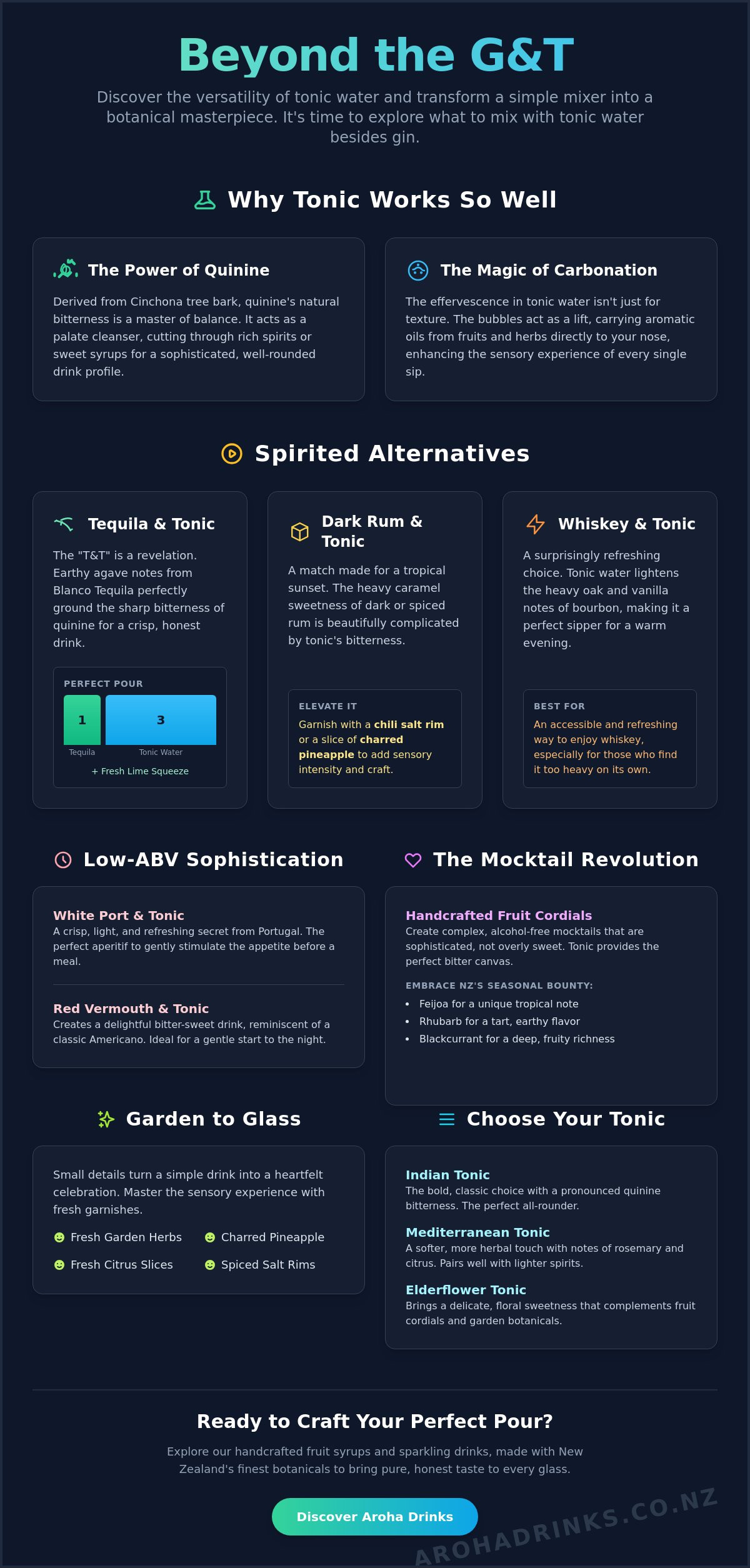
Blanco tequila is a revelation. Its earthy agave notes ground the sharp bitterness of quinine. We call it the T&T. It feels grounded and honest. Dark rum is another favorite. It brings a heavy caramel sweetness that tastes like a tropical sunset. Even whiskey finds a new life here. Tonic water lightens the heavy oak and vanilla notes of bourbon, making it a refreshing choice for a warm summer evening. It's about letting the spirit breathe.
Agave and Cane: The Tropical Side of Tonic
Creating the perfect Tequila Tonic is simple. Use a ratio of one part spirit to three parts tonic. Add a generous squeeze of fresh lime to tie the flavors together. It's a balance of earth and air. For a twist on the traditional Dark and Stormy, try mixing spiced rum with tonic instead of ginger beer. The bitterness adds a sophisticated layer that ginger often masks. You can elevate your creation with thoughtful garnishes. A rim of chili salt or a piece of charred pineapple adds a sensory intensity that honors the craft.
Fortified Wines: The Sophisticated Low-ABV Choice
Sometimes, you want flavor without the weight of high alcohol. When deciding what to mix with tonic water besides gin for a lighter option, fortified wines are the answer. White Port and Tonic is a crisp, refreshing secret from Portugal. It's light; it's pure. Red Vermouth and Tonic creates a bitter-sweet drink similar to an Americano. These pairings are perfect for brunch or a gentle start to the night. They allow you to linger over your glass and enjoy the company you're with.
We believe in using the best ingredients to create these moments of joy. Whether you're experimenting with spirits or looking for a non-alcoholic base, quality matters. Our sparkling drinks are crafted with that same passion for purity and regional identity. Every bottle is a labor of love, designed to bring nature's finest flavors to your table.
The Mocktail Revolution: Non-Alcoholic Tonic Pairings
The world of non-alcoholic drinks is flourishing. It's no longer just about juice. It's about craft and the emotional investment of the maker. When you look for what to mix with tonic water besides gin, you open a door to vibrant botanicals and pure fruit flavors. While many guides focus on tonic water and spirit pairings, the true magic often happens without the alcohol. It's about creating a drink that honors your body and your taste buds. This mocktail revolution is a celebration of sincerity and passion. It's a way to bring joy to every guest at your table.
The 'Coffee Tonic' is a surprising trend that has captured the hearts of many. Pour cold brew coffee over ice and top with tonic. The fizz lifts the deep, roasted notes of the bean. It's a refreshing caffeine kick that feels adult and sophisticated. If you prefer something softer, try fresh fruit purees. Whisking a spoonful of seasonal berry or stone fruit puree into your tonic creates an 'Aqua Fresca' style beverage. In New Zealand, using a touch of crushed feijoa or tart blackcurrant brings a local soul to the glass. It's sparkling. It's bright. It's nature in a glass. These simple combinations show how much we care about what we consume.
Artisanal Cordials: The Secret Ingredient
A splash of cordial is the simplest way to add depth to your glass. These syrups are a labor of love. They capture the essence of the fruit in its purest form. For a balanced drink, we suggest a ratio of one part syrup to four or five parts tonic water. Pour it over plenty of ice. Natural fruit syrups provide a cleaner, more honest taste than mass-produced sodas. You can taste the sunshine and the soil in every drop. It's a gentle way to transform your evening ritual without the need for spirits. This approach makes it easy to decide what to mix with tonic water besides gin while still feeling like you're treating yourself to something special.
Tea and Tonic: A Floral Infusion
Chilled tea brings tannins and beautiful color to your mixer. Earl Grey adds a bergamot citrus note, while Hibiscus turns the drink a deep, passionate red. The 'Royal-Tea' tonic mix is a floral, dry alternative that brings a sense of ceremony to your glass. Pairing these floral teas with an elderflower-infused tonic creates a double-botanical hit. It's a celebration of the garden. Even a few drops of bitters like Angostura can change everything. It adds a spicy complexity that makes tonic feel like a 'grown-up' drink. It's a small touch that shows great care for the sensory experience. Pure. Simple. Heartfelt.
Garden-to-Glass: NZ Botanicals and Fresh Garnishes
The garden is a place of quiet wonder. It offers everything you need to transform a simple glass of sparkling water into something deeply personal. When you explore what to mix with tonic water besides gin, you begin to see the land through a different lens. It’s no longer just about the spirit. It’s about the aromatic toppers and the seasonal fruits that grow right outside your door. New Zealand’s unique landscape provides a palette of flavors that are bold, honest, and full of soul.
Kiwi Ingenuity: Flavours of Aotearoa
The tartness of Rhubarb is a perfect match for the dry bitterness of quinine. It brings a bright, pink energy to the glass that feels like spring. Then there is the Feijoa. A Feijoa and tonic pairing is uniquely ours. It captures the heavy, sweet scent of a New Zealand summer in every bubble. These traditional flavors are a testament to our regional identity. For those seeking more local inspiration, exploring nz made drinks can reveal a world of botanical possibilities. Using these ingredients is an act of care for the land and the craft.
The Art of the Garnish
A garnish is more than a decoration. It is a sensory invitation. Before you add mint or basil to your drink, give the leaves a gentle smack between your palms. This releases the essential oils and fills the air with fragrance. Rosemary and kaffir lime leaves offer a more robust, savory note. We also believe in a zero-waste approach. Use the 'rubbish' from your kitchen. Lemon peels, cucumber ends, and even herb stems carry intense flavor. A tiny pinch of sea salt is another secret. It actually makes the tonic taste less bitter and lets the fruit notes shine through.
Choosing what to mix with tonic water besides gin becomes an adventure in flavor when you look to the pantry. During the colder months, spices can add a comforting warmth to your glass. Consider these simple additions:
- Peppercorns: These add a subtle, savory heat that pairs beautifully with tequila.
- Star Anise: This spice brings a beautiful licorice aroma and looks stunning in the glass.
- Cinnamon Sticks: A natural stirrer that infuses a gentle, woody sweetness into winter tonics.
Citrus like grapefruit or blood orange adds a sophisticated depth that lemon often lacks. Every choice you make is an opportunity to share something genuinely good with those you love. If you are ready to bring these flavors home, our fruit syrups and cordials are crafted with this same passion for nature's purity. They are the perfect base for your next garden-to-glass creation.
Crafting the Perfect Pour with Aroha
The beauty of a drink lies in the details. While the 'hero' ingredient often gets the glory, the quality of your mixer is what truly creates a memorable experience. We believe in small-batch care. Our ingredients are gathered with affection from the Canterbury Plains, ensuring every bottle reflects the purity of the land. When you explore what to mix with tonic water besides gin, you are choosing to honor the craft of the maker. It is a labor of love that turns a simple gathering into a heartfelt celebration of nature.
Creating a 'Tonic Bar' at home is a wonderful way to share this passion with others. Set out a variety of glassware, fresh herbs from the garden, and a selection of artisanal syrups. It encourages your guests to experiment and find their own moments of joy. Using high-quality components ensures that even the simplest mocktail feels sophisticated and intentional. It's about providing something genuinely good, made with attention and regional pride.
Aroha’s Top Tonic Recommendations
We have a few favorites that we believe bring out the best in a crisp tonic. The Elderflower and Tonic is a timeless classic. It is floral and light, tasting exactly like a splash of New Zealand sunshine. For those who prefer a bit of zest, our Rhubarb and Tonic offers a sharp, pink-hued refreshment that wakes up the palate. If you want something deeper for an evening sipper, try Blackcurrant and Tonic. It is rich, intense, and packed with the soul of the fruit. These combinations make it easy to decide what to mix with tonic water besides gin while staying connected to traditional flavors.
How to Serve Like a Pro
The way you pour matters. Use the 'gentle stir' technique to incorporate your syrup without bruising the bubbles. You want to keep that lively fizz alive. Glassware also plays a role in the sensory experience. Choose a tall Highball glass for maximum refreshment and carbonation. If you want to focus on the aromatics of your garnishes, a wide-bowled Copa glass is the perfect choice. Finally, always use 'big ice'. Larger cubes melt more slowly, preventing your drink from becoming watery and dull. It keeps the flavor pure from the first sip to the last.
Every pour is an opportunity to show care for yourself and your guests. It is a celebration of local ingenuity and the simple joy of a well-crafted drink. To start your own botanical journey, explore Aroha's range of natural cordials and discover the difference that artisanal quality makes in your glass.
Embrace Your Botanical Journey
Your glass is a small celebration. A place for nature to shine. We have explored how the bitterness of quinine balances everything from earthy tequila to the floral notes of tea. Now you know what to mix with tonic water besides gin to create something truly special. It is about more than just a drink. It is about choosing flavors that carry a sense of place and passion. Every sip should feel like a moment of genuine joy.
We take immense pride in our craft. Every syrup is handcrafted in Canterbury, New Zealand. We use pure artesian spring water and natural ingredients. There are no artificial colors or flavors here. Just honest, wholesome goodness. Shop our handcrafted NZ cordials for the perfect tonic mix and bring the soul of the land to your next gathering. Your botanical adventure is just beginning.
Frequently Asked Questions
Can you drink tonic water by itself?
Yes, you can absolutely enjoy tonic water on its own as a crisp, bitter refresher. Its unique quinine profile acts as a wonderful palate cleanser between courses or as a sophisticated alternative to sugary soft drinks. Many people find the sharp, dry bubbles deeply satisfying without any additions. It is a simple way to stay hydrated while enjoying a complex flavor that honors the craft of traditional beverage making.
What is the best non-alcoholic substitute for gin in a G&T?
A botanical-forward non-alcoholic spirit is the most traditional substitute for gin. These spirits use distilled herbs to mimic the juniper and spice notes you love. If you are looking for what to mix with tonic water besides gin for a fruitier profile, artisanal fruit cordials are a beautiful choice. They offer a deep, natural sweetness that balances the quinine's bitterness perfectly. It's a generous way to enjoy a sophisticated drink without the alcohol.
Is tonic water the same as sparkling water or club soda?
No, tonic water is distinct because it contains quinine and often a touch of sweetener. While sparkling water and club soda are simply carbonated water with optional minerals, tonic has a characteristic bitter bite. This bitterness is what makes it such a versatile stage for other flavors. It is a specialized mixer designed to provide balance and depth, rather than just effervescence. The history of quinine sets it apart from every other bubbly water.
How much sugar is usually in tonic water compared to soda?
Tonic water typically contains a similar amount of sugar to standard fruit sodas to balance the intense bitterness of the quinine. However, many craft producers now offer low-sugar or "skinny" versions that use natural sweeteners or smaller amounts of cane sugar. It's always a good idea to check the label for specific details. Choosing a quality mixer ensures you are getting a balanced taste that doesn't overwhelm the delicate botanicals in your glass.
What fruit goes best with tonic water besides lime?
Grapefruit and blood orange are exceptional choices because their natural acidity and slight bitterness complement the quinine. Berries like raspberries or blackberries also add a beautiful color and a soft sweetness. For a truly local experience, try using a splash of blackcurrant or feijoa syrup. These fruits bring a regional soul to your drink. They transform a simple glass into a celebratory sensory experience that feels grounded in nature and local ingenuity.
Can I mix tonic water with coffee?
Yes, mixing tonic water with cold brew coffee or a shot of espresso is a popular and refreshing trend. The carbonation lifts the roasted, chocolatey notes of the coffee while the bitterness of the tonic adds a sophisticated layer of complexity. It is an honest, invigorating drink that works beautifully on a warm afternoon. Simply pour your coffee over ice and top with a premium tonic for a clean, sparkling caffeine kick.
Does tonic water go bad once opened?
Tonic water doesn't necessarily "go bad" in a way that makes it unsafe, but it will lose its carbonation and become flat. For the best sensory experience, we recommend using it within two to three days of opening. Be sure to keep the cap tightly sealed and store it in the fridge to preserve those precious bubbles. Flat tonic loses the effervescence that is so vital for lifting the aromatics of your chosen mixers.
What are the best herbs to put in a tonic drink?
Rosemary, mint, and basil are among the best herbs to elevate your tonic drink. Rosemary adds a woody, savory depth, while mint provides a burst of cooling freshness. Basil offers a slightly peppery, sweet aroma that pairs wonderfully with fruit syrups. Remember to gently smack the leaves before adding them to your glass. This simple act of care releases the essential oils, ensuring every sip is filled with the pure fragrance of the garden.