

What to Do With Leftover Fruit Syrup: 15 Creative Ways to Use Every Drop
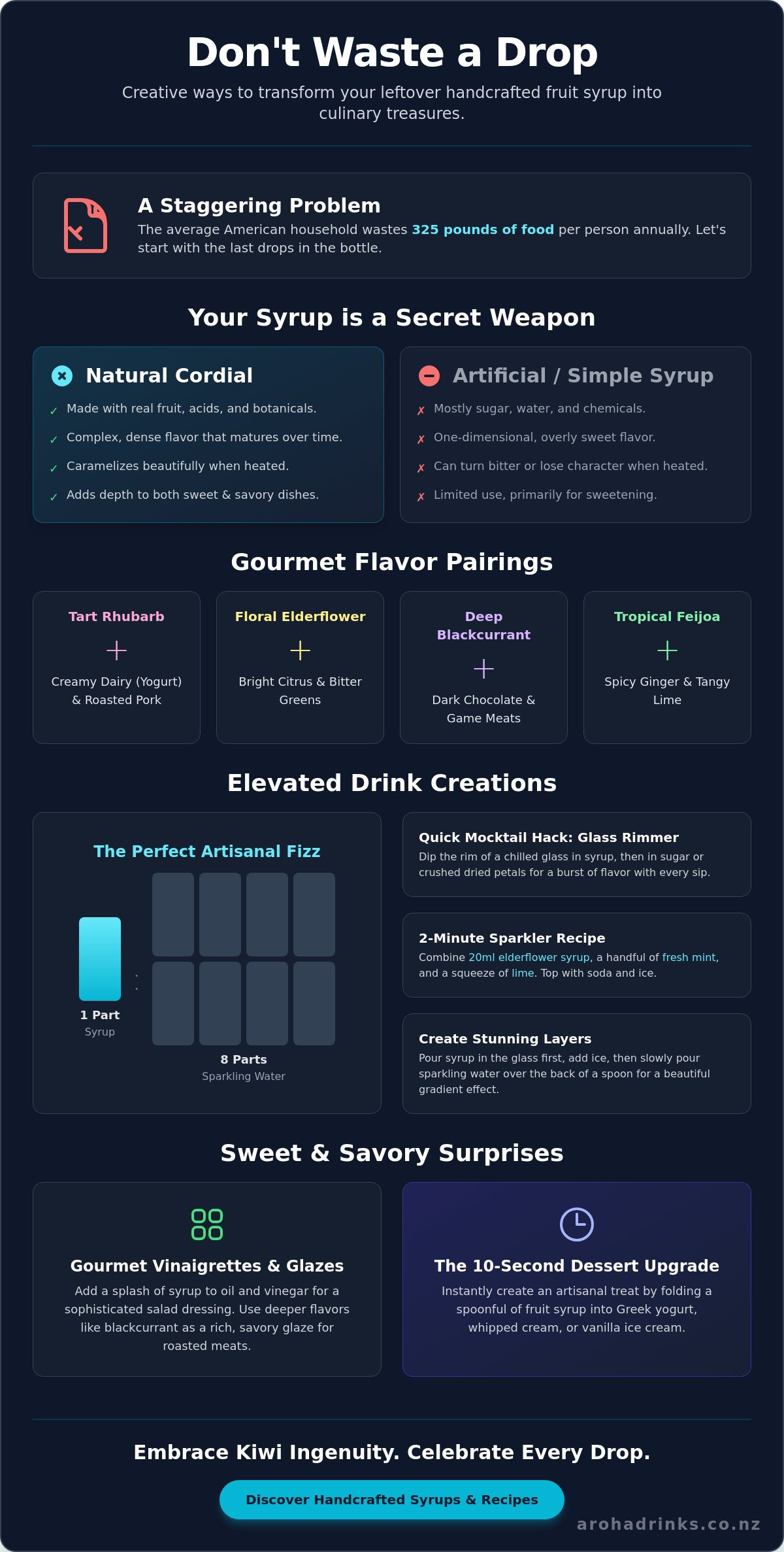
The average American household wastes about 325 pounds of food per person every year. It is a staggering amount of nature's bounty ending up in landfills. You likely feel that same pinch of guilt when you stare at a half-empty bottle of handcrafted cordial. It is a concentrated burst of affection and pure fruit. Still, you might be unsure what to do with leftover fruit syrup once the novelty of standard drinks wears off. We believe every drop of nature's goodness should be celebrated.
We will show you how to transform that remaining syrup into gourmet treats, from shimmering mocktails to artisanal glazes. You don't need to be a professional chef to master these flavor pairings or the trendy "swicy" combinations rising in 2026. Our guide provides 15 creative ways to use your syrup. We cover everything from 2-minute kitchen shortcuts to impressive dessert ideas that honor the craft behind every bottle. Let's make sure nothing goes to waste.
Key Takeaways
- Discover why the final drops of handcrafted cordial are more flavor-dense than juice, making them a secret weapon in your pantry.
- Learn the exact ratios to elevate your daily hydration into a sophisticated, artisanal sparkling drink.
- Master the art of the 10-second dessert upgrade by folding rich fruit notes into cream or yogurt.
- Find out exactly what to do with leftover fruit syrup to create gourmet vinaigrettes and savory glazes that celebrate Kiwi ingenuity.
- Explore how starting with pure, natural ingredients ensures every drop of your syrup remains a wholesome kitchen treasure.
Why That Last Drop of Fruit Syrup is a Kitchen Treasure
That final inch of syrup at the bottom of the bottle isn't a nuisance. It's a gift. It represents the very essence of the fruit, distilled into a vibrant, punchy liquid. Many people wonder what to do with leftover fruit syrup once the main bottle is gone. They see a remnant; we see a concentrated flavor bomb. This liquid is often more dense and aromatic than the first pour. It has settled and matured, holding onto the soul of the harvest.
Real fruit cordials behave differently than artificial alternatives. Mass-produced syrups rely on chemicals and high-fructose corn sugar. These ingredients often turn bitter or lose their character when heated. Natural syrups, however, carry the authentic acids and oils of the fruit. They caramelize beautifully. They emulsify into dressings. They bring a brightness that only nature provides. There is a quiet joy in using every drop. It is a small act of respect for the land and the hands that harvested the fruit.
We call this Kiwi ingenuity. It is the art of making the most of what nature provides. We don't believe in waste. We believe in transformation. By looking at that half-empty bottle with a bit of imagination, you can unlock a world of savory surprises and sweet delights. This is where your kitchen becomes an artisanal workshop.
The Difference Between Cordial and Simple Syrup
Understanding your ingredients is the first step to success. A true cordial is vastly different from basic simple syrup. Simple syrup is just sugar and water. It is one-dimensional and cloying. A natural fruit cordial contains real fruit acids and botanicals. This acidity is the secret weapon in your pantry. It balances the sweetness in a dessert and cuts through the fat in a savory dish. You should never treat a natural syrup like plain sugar water. It is a complex, living ingredient that adds depth to everything it touches.
Flavour Pairing 101: From Feijoa to Elderflower
Finding the right partner for your syrup makes all the difference. Knowing what to do with leftover fruit syrup starts with understanding these classic pairings:
- Tart Rhubarb: This is a dream when paired with creamy dairy. Stir it into thick Greek yogurt or use it to cut through the richness of roasted pork.
- Floral elderflower: This delicate bloom loves citrus. A splash in a lemon-based vinaigrette adds a sophisticated, summery lift to bitter greens.
- Deep Blackcurrant: Use this to add intensity to dark chocolate. It also provides a wonderful earthy depth to savory sauces for venison or lamb.
- Tropical Feijoa: This unique flavor shines alongside ginger or lime. It brings a punchy, nostalgic sweetness to any dish.
Each fruit has a partner waiting in your pantry. It only takes a tiny amount of syrup to change the entire profile of a meal.
Elevated Drink Variations: Beyond the Standard Mix
Mixing syrup with water is a lovely start. It is simple, refreshing, and honest. But it is only the beginning of the journey. When you are staring at the bottom of the bottle, you have the base for a sophisticated aperitif. You don't need alcohol to create a drink that feels special. A splash of leftover syrup can be transformed into a complex, grown-up beverage with just a few pantry staples.
One of our favorite ways to use those final drops is by creating a traditional "shrub" style drink. Add a teaspoon of organic apple cider vinegar to your syrup before topping it with sparkling water. The vinegar adds a fermented tang and a sharp bite. It balances the natural sweetness of the fruit. This combination mimics the complexity of a fine wine. It is a wonderful way to honor the purity of the ingredients while exploring what to do with leftover fruit syrup. For the perfect artisanal fizz, we recommend a 1:8 ratio. One part syrup to eight parts sparkling water. This allows the delicate botanicals to breathe without being overwhelmed by sugar.
Crafting the Perfect Mocktail
Visual beauty is part of the joy of a handcrafted drink. Use your leftover syrup as a glass rimmer. Dip the edge of a chilled glass into the syrup, then press it into a plate of sugar or crushed dried petals. It adds a burst of flavor to every sip. If you want a quick treat, try the 2-minute Elderflower and Mint Sparkler. Combine 20ml of elderflower syrup, a handful of fresh mint, and a squeeze of lime. Top with soda and plenty of ice. To impress your guests, try layering your syrups for a stunning NZ drink recipe. Pour the syrup in first, add ice, and then gently pour your sparkling water over the back of a spoon to create a beautiful gradient effect.
Warm and Cosy: Fruit Syrups in Hot Drinks
Fruit syrups aren't just for summer afternoons. They are incredibly comforting during cooler Canterbury nights. Adding a spoonful of Blackcurrant or Rosehip syrup to herbal tea provides a gentle, fruity lift. It feels like a warm embrace. You can also create a "Fruit Toddy" by mixing hot water, a slice of lemon, and a generous pour of Rhubarb syrup. The tartness of the rhubarb is particularly soothing when the air turns crisp. For a decadent twist, swirl a little syrup into your hot chocolate. The pairing of rich cocoa and forest berries is a timeless classic that brings a touch of artisanal magic to your evening. If you find your shelf looking bare, you can always explore our latest fruit syrups and cordials to keep the inspiration flowing.
Culinary Creativity: Savoury Glazes and Salad Dressings
Your kitchen is a place of alchemy. While we often think of fruit syrups for refreshments, their true power often shines in savoury cooking. The natural acidity and concentrated sugars make them an ideal partner for fats and salts. If you're wondering what to do with leftover fruit syrup, look no further than your next roast or salad. These drops of liquid sunshine bring a complexity that store-bought sauces simply can't match. It is about using the whole bottle with affection and care.
You can also reduce your syrup to create a thick, balsamic-style drizzle. Simmer a small amount in a heavy-bottomed pan until it coats the back of a spoon. This concentrated nectar is stunning when drizzled over a regional cheese board or fresh figs. It also works wonders for balancing spicy dishes. A touch of fruit sweetness can tame the heat of a fiery chili sauce, creating a harmonious blend of flavours that dance on the palate. This is the essence of artisanal cooking. Simple ingredients, treated with respect, yield extraordinary results.
The 3-Ingredient Fruit Vinaigrette
The perfect vinaigrette is a balance of three elements: acid, oil, and a touch of sweetness. Most recipes call for honey or plain sugar. However, using a fruit syrup adds a layer of botanical depth. Use a ratio of three parts oil, one part vinegar, and one tablespoon of leftover syrup. A splash of Elderflower syrup in a dressing for goat cheese salad is transformative. It is light, floral, and elegant. For a more grounded flavour, try Pear syrup with a walnut and blue cheese salad. To achieve a silky texture, whisk the syrup and vinegar together first before slowly drizzling in the oil to create a stable emulsion.
Meat and Vegetable Glazes
Meat loves fruit. The sugars in the syrup caramelize under the heat, creating a beautiful, sticky crust. Try brushing Blackcurrant syrup over lamb chops during the final minutes of grilling. The deep, earthy berries complement the rich meat perfectly. For a vibrant side dish, glaze your carrots with a mix of Ginger and Rhubarb syrup. The zesty ginger and tart rhubarb bring a bright lift to the sweet, roasted vegetables. You can even use these syrups as a base for a quick sweet and sour stir-fry sauce. Thinking about what to do with leftover fruit syrup shouldn't be a chore; it's an opportunity for culinary discovery. It is about celebrating the purity of the fruit in every meal.
Desserts and Frozen Treats: Making the Flavour Last
Sweetness is the soul of every cordial. It is the heart of the fruit, captured with deep care and bottled for your enjoyment. When you reach the end of a bottle, you hold the essence of a harvest in your hands. Making that flavour last is an act of respect for the land. You don't need a full bottle to create a moment of joy. A tiny amount can transform a simple afternoon snack into a celebratory treat. It is about nurturing your family with pure, honest ingredients.
One of the quickest ways to elevate a meal is a 10-second dessert upgrade. Fold a tablespoon of syrup into freshly whipped cream or thick Greek yoghurt. It adds a delicate blush of colour and a sophisticated botanical note. You can also use those final drops to soak a sponge cake. Poke small holes in a warm cake and pour the syrup over. It creates a moist, punchy finish that surprises the palate. Deciding what to do with leftover fruit syrup becomes a joyful task when you realise it is the key to artisanal baking.
How to Make a 3-Step Fruit Syrup Granita
Granita is a refreshing summer staple. It is light and pure. It feels like a snowy treat from a boutique garden cafe. You only need the final 50ml of your favourite bottle to make it happen. This process is slow and meditative. It honours the patience required to grow the fruit itself.
- Step 1: Mix your leftover syrup with water using a 1:2 ratio. Pour the mixture into a shallow dish.
- Step 2: Place the dish in the freezer for 30 minutes. Take it out and scrape the edges with a fork to create icy crystals.
- Step 3: Repeat this scraping process every half hour until you have a light, fluffy fruit snow. Serve it in chilled glasses for an elegant finish.
Baking with Cordials
Your oven is the perfect place for fruit experimentation. You can replace a portion of the sugar in your favourite muffin recipes with concentrated syrup. It adds moisture and a hidden depth of flavour. For biscuits, mix a teaspoon of syrup with icing sugar to create a vibrant, glossy glaze. It is simple and beautiful. You can even fold a swirl of syrup into a cheesecake base before baking. This creates a marbled effect that looks as good as it tastes. If you want to continue your journey with nature's best flavours, explore our range of fruit syrups and cordials to find your next inspiration.
For a family activity, try making gourmet fruit leather or jellies with the kids. Simmer the syrup with a little fruit puree until it thickens, then dry it low and slow in the oven. It is a wholesome way to ensure every drop of goodness is enjoyed. Nothing goes to waste when you cook with affection. This artisanal approach ensures your kitchen remains a place of warmth and creativity.
The Aroha Philosophy: Handcrafted Quality in Every Drop
At the heart of our craft is a deep affection for the land. We believe every bottle should be a celebration of nature's purity. This philosophy extends far beyond the first pour. When you are deciding what to do with leftover fruit syrup, you are participating in a tradition of resourcefulness. It is what we call Kiwi ingenuity. It is about respecting the ingredients and making sure nothing of value is lost. We put our hearts into every batch so that you can feel that care in your own kitchen.
Starting with a natural NZ made drink makes all the difference in your culinary experiments. High-quality cordials contain real fruit acids and botanicals, not just flavoured sugar. This is why the leftovers perform so beautifully in the recipes we have shared. Whether you are glazing a roast or whisking a dressing, the integrity of the fruit remains. Our 500ml bottles are a conscious choice. They are designed to be used and enjoyed while minimizing waste. We want every drop to find a home in a delicious creation.
We invite you to join our community and share your own kitchen discoveries. Have you found a unique way to use the last splash of Elderflower? Or perhaps a secret Rhubarb glaze? Sharing these ideas brings joy to others and honours the effort put into every harvest. It is a cycle of generosity that starts in the garden and ends at your table.
From Our Canterbury Garden to Your Table
We invest ourselves emotionally in every bottle of Elderflower and Rhubarb we produce. Our process begins with pure artesian water and locally sourced ingredients. We work closely with regional producers to ensure we are capturing the true essence of New Zealand. By finding what to do with leftover fruit syrup in your home, you are supporting this local ecosystem. You are helping us make every drop count. It is a partnership built on a shared love for authentic, honest flavours.
Ready for a Fresh Bottle?
Our Elderflower and Blackcurrant syrups are particularly popular this season. They offer a bright, nostalgic taste that works perfectly in both drinks and desserts. If you are feeling adventurous, our taster packs are a great way to experiment with a wider variety of glazes and sophisticated mocktails. Each bottle is a new opportunity for creativity. You can find your next labour of love purchase in our shop today. We look forward to being a part of your next kitchen masterpiece.
Embrace the Art of the Final Drop
Every bottle we create is a labor of love. It begins with traditional New Zealand flavours and pure Canterbury artesian water. We have explored how those final splashes can become shimmering granitas or vibrant glazes for your Sunday roast. You now have the tools to transform simple pantry staples into gourmet treats. Knowing what to do with leftover fruit syrup turns a half-empty bottle into a genuine kitchen treasure. It is a simple way to practice Kiwi ingenuity while celebrating the purity of natural ingredients.
Our syrups are handcrafted in small batches with love. We believe that the care we put into production should be matched by the joy you find in every use. Whether you are whisking a floral vinaigrette or swirling berry notes into hot chocolate, you are honoring the land. Explore our range of handcrafted fruit cordials and start your next kitchen adventure. We can't wait to see what you create with your next bottle. Let every drop bring a little more magic to your table.
Frequently Asked Questions
How long does leftover fruit syrup last in the fridge?
Opened, commercially produced fruit syrups generally stay fresh for 6 to 12 months when refrigerated. This long shelf life is due to the natural sugar content acting as a gentle preservative. If you have made a homemade version with fresh fruit, it's best to use it within 14 to 30 days. Always keep the cap tight to maintain the purity of the flavours. A quick sniff before use ensures the fruit notes are still bright and honest.
Can I freeze fruit syrup to use later?
You can freeze fruit syrup to preserve its vibrant taste for many months. Pour the liquid into ice cube trays for easy, pre-measured portions. These frozen cubes are perfect for dropping into sparkling water or blending into a summer granita. Once frozen, the syrup maintains its quality and doesn't lose its aromatic soul. It's a wonderful way to ensure you always have a touch of nature ready in your freezer for unexpected guests.
Is fruit syrup the same as cordial for baking?
While the terms are often used interchangeably, a high-quality cordial usually contains more fruit acid and botanical depth than a basic simple syrup. This acidity is what makes cordials so effective when you're looking for what to do with leftover fruit syrup in the kitchen. In baking, cordials provide a more complex flavour profile. They react beautifully with leavening agents. They provide a moist, aromatic finish to sponges and glazes that sugar water simply cannot match.
What is the best way to store a half-empty bottle of syrup?
Keep your bottle in a cool, dark place, preferably the refrigerator, with the lid sealed tightly. Exposure to air and heat can cause the delicate fruit oils to degrade over time. Ensure the rim of the bottle is clean before closing it to prevent any sticky buildup or crystallisation. This simple care keeps the contents as pure and refreshing as the day you first opened it. It respects the craft that went into every batch.
Can I use leftover fruit syrup in a SodaStream?
You can certainly use your syrup to flavour drinks made with a SodaStream. Carbonate your water first, then gently stir in the syrup to avoid a sudden overflow of bubbles. This method allows you to control the intensity of the flavour. It's an excellent use for those final drops. You get to enjoy a bespoke, artisanal sparkling drink. It feels much more special than a standard soda and honors the fruit's natural intensity.
Will fruit syrup curdle milk if I add it to a milkshake?
Syrups with high acidity, like Rhubarb or Blackcurrant, can cause milk to curdle if mixed too slowly. To prevent this, ensure your milk is very cold and whisk the syrup in quickly. The cold temperature helps stabilize the proteins in the dairy. This technique allows you to enjoy a creamy, fruit-infused treat without any unwanted texture. It's all about the gentle balance of ingredients. A quick stir creates a harmonious, velvety drink.
How do I know if my leftover fruit syrup has gone bad?
Check for any visible signs of spoilage such as mould, unexpected cloudiness, or a change in colour. A sour or "off" fermenting smell is also a clear indicator that the syrup is no longer fresh. If the liquid looks clear and smells like the original fruit, it's likely safe to use. Knowing what to do with leftover fruit syrup safely ensures every kitchen adventure remains a joyful and wholesome experience for your family.