

What Does Elderflower Taste Like? A Sensory Guide to Nature’s Finest
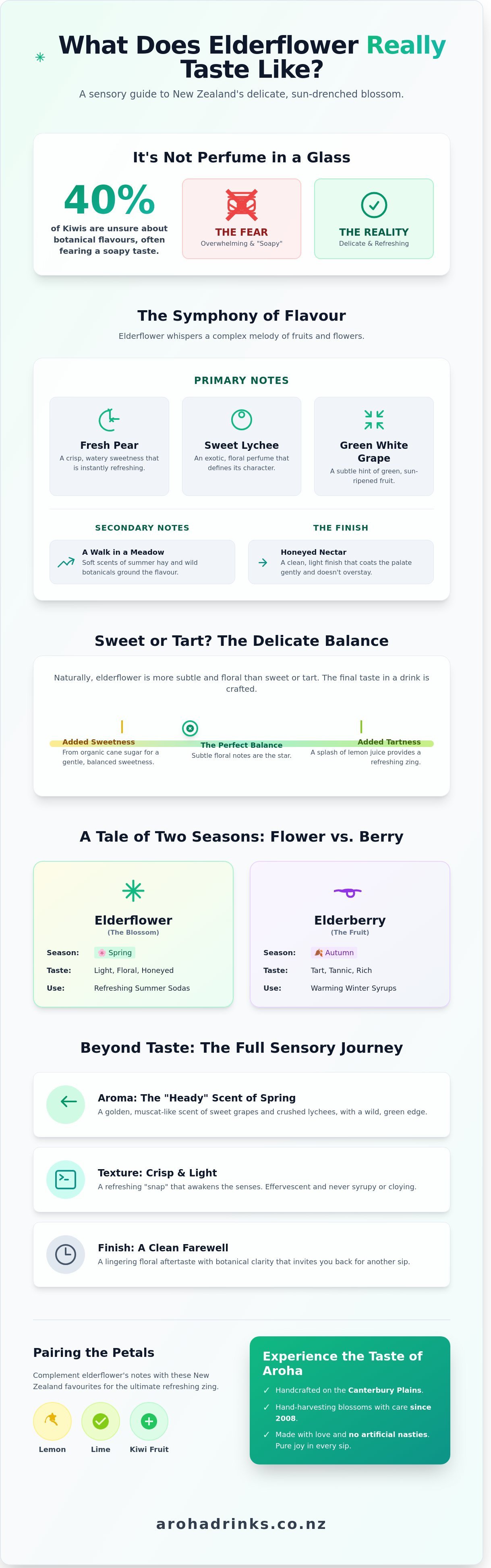
Last summer at a garden party in Havelock North, a guest hesitated over a glass of chilled sparkling water, worried that a splash of elderflower might make it taste like a bar of floral hand soap. It is a common concern for the 40 percent of Kiwis who are still unsure about botanical flavours. You want something refreshing and natural, but you don't want to feel like you are drinking perfume. It is also easy to get those delicate white blossoms confused with their dark, tart elderberry cousins.
At Aroha, we believe nature provides the finest ingredients when treated with care. We want to help you understand exactly what does elderflower taste like so you can enjoy this local favourite with total confidence. It is not soapy or overwhelming. Instead, it offers a gentle sweetness reminiscent of fresh lychee and wild honey. This guide explores the unique sensory profile of the flower and provides simple pairing ideas for your next bottle of cordial. Discover why this humble blossom is pure joy in every sip.
Key Takeaways
- Uncover the delicate balance of fresh pear, sweet lychee, and white grape that defines this sun-drenched botanical.
- Learn exactly what does elderflower taste like by exploring its heady muscat scent and the crisp, effervescent finish of a well-crafted drink.
- Understand why high-quality elderflower avoids the "soapy" floral trap, offering a refreshing experience far removed from potpourri.
- Discover how to pair these petals with New Zealand favorites like lemon, lime, and kiwi fruit for the ultimate refreshing zing.
- Explore the Aroha story and how we capture the wild heart of the Canterbury Plains in every handcrafted bottle, made with love and no artificial nasties.
The Flavour Profile: A Blend of Pear, Lychee, and Sunshine
Elderflower is the tiny, star-shaped blossom of the Sambucus nigra tree. These creamy white clusters appear across New Zealand during late November and December; they signal the true start of the warm season. To understand what does elderflower taste like, you have to imagine a flavour that is both familiar and entirely unique. It doesn't scream with a single note. Instead, it whispers a complex melody of fruits and flowers that feels like a spring morning in the Canterbury Plains.
The primary taste of elderflower is often described through three distinct fruit profiles. First, there is the crisp, watery sweetness of a perfectly ripe pear. This is followed closely by the exotic, floral perfume of lychee. Finally, a subtle hint of green, sun-ripened white grape rounds out the experience. These blossoms belong to the Sambucus genus, a group of plants that has been cherished in traditional New Zealand kitchens for generations. At Aroha, we've been hand-harvesting these blooms since 2008 to capture this exact fleeting magic.
Beyond the fruit, elderflower carries secondary "green" notes that ground the flavour. It tastes like a walk through a fresh meadow. You might notice a soft scent of freshly cut hay or the earthy sweetness of wild grass. This botanical depth is what makes it so refreshing. It's a clean taste. It's pure joy in every sip. Unlike the sharp, aggressive acidity of citrus, elderflower offers a "honeyed" sweetness. This isn't a heavy, sugary syrup sensation; it's a light, nectar-like quality that coats the palate gently without overstaying its welcome.
- Primary Notes: Fresh pear, sweet lychee, and green white grape.
- Secondary Notes: Summer hay, spring meadows, and wild botanicals.
- Finish: A clean, honeyed nectar that feels light and airy.
Is it sweet or tart?
Naturally, elderflower is delicate and subtle rather than sugary. While many people associate it with sweetness, that often comes from the organic cane sugar we use in our small-batch cordials. The tartness you might taste in a glass of elderflower bubbly usually comes from a splash of lemon juice, which we add to balance the floral notes. Elderflower is a sophisticated balance of stone fruit sweetness and botanical freshness.
The Elderflower vs. Elderberry distinction
It's easy to confuse the two, but they are worlds apart in character. The flower is harvested in the height of spring and tastes light, floral, and golden. In contrast, the elderberry arrives in autumn as a dark, purple fruit with a tart, tannic profile similar to a blackberry or blackcurrant. In Kiwi kitchens, the flowers are traditionally turned into refreshing summer sodas, while the berries are simmered into rich, warming syrups for the winter months. Both are gifts from the same tree, crafted with care to suit the changing seasons.
The Sensory Experience: Aroma, Texture, and Finish
To truly understand what does elderflower taste like, you have to look beyond the tongue. The experience begins the moment you pop the cap. A heady, muscat-like scent fills the air, reminiscent of sweet grapes and crushed lychees. It's a fragrance that feels heavy and golden, much like the late afternoon sun in a New Zealand garden. This aroma is thick with the promise of sweetness, yet it carries a wild, green edge that keeps it grounded in nature. It's the smell of a Canterbury spring, captured and bottled with genuine care.
The texture of a well-crafted elderflower drink is just as vital as its scent. When you take that first sip, the liquid should feel crisp and remarkably light. If it's a sparkling variety, the effervescence acts as a carrier for the floral notes, dancing across the palate and preventing the natural sugars from feeling heavy. It lacks the syrupy, tongue-coating thickness of mass-produced sodas. Instead, it offers a refreshing "snap" that awakens the senses. This lightness is a hallmark of quality, showing that the drink was made with love rather than industrial shortcuts.
The finish is where the magic happens. Unlike many fruit-based drinks that leave a cloying, sugary residue, elderflower departs with a clean, lingering floral aftertaste. It's a gentle goodbye that stays with you for several minutes, inviting you back for another sip. This botanical clarity is why many people find it so addictive. According to research from the delicate and sweet floral flavor experts at Penn State Extension, these blossoms provide a unique profile that is both sophisticated and approachable, making them a staple in traditional artisanal kitchens.
The "Heady" Scent of Spring
The fragrance of elderflower is often described as a blend of creamy honey and fresh wild blooms. It's a potent smell that can fill an entire room when the blossoms are at their peak in November. For many, the aroma is just as important as the flavour itself because it triggers a sensory "reset." A prime example of this aromatic power is the Aroha Elderflower Sparkling, which retains the true, unfiltered scent of the flower. It smells like a fresh bouquet, offering pure joy before the liquid even touches your lips.
Crispness and Refreshment
When the Canterbury heat hits 27 degrees in mid-February, standard sugary drinks can feel exhausting. This is where elderflower shines. Because the flavour profile is naturally bright, it cuts through thirst with a precision that citrus alone can't match. When you're trying to figure out what does elderflower taste like in a practical sense, think of it as the "elevated" alternative to soda. The carbonation lifts the floral notes, creating a sophisticated refreshment that feels like a treat rather than just a way to hydrate. It's soft drinks, elevated for a more mindful palate.
The brain naturally associates this flavour with warmth and relaxation. Scientists have long noted how specific scents can trigger emotional responses; for many New Zealanders, elderflower is the taste of a long lunch or a quiet afternoon on the deck. It's a nostalgic flavour that feels wholesome and authentic. By choosing a drink crafted with traditional methods, you're not just tasting a plant. You're experiencing a piece of Kiwi ingenuity and a commitment to nature's finest offerings. If you're ready to experience this for yourself, you can browse our handcrafted sparkling range to find your perfect summer match.
The Floral Debate: Why Elderflower Doesn’t Taste Like Soap
A common hesitation for those asking what does elderflower taste like is the fear of drinking liquid potpourri. We've all had that one floral tea or candy that tasted more like a bar of hand soap than a refreshment. This soapy reputation usually comes from heavy-handed use of lavender or rose; these plants carry intense, oily aromatics that can easily overwhelm the palate. Elderflower is different. It belongs to a completely different sensory family. Instead of the heavy, cloying scent of a perfume shop, elderflower offers a crispness that feels like walking through a sun-drenched orchard in the Canterbury Plains.
The secret lies in the blossom's chemical makeup. While many flowers rely on terpenes that mimic cleaning products, elderflower contains high levels of cis-rose oxide and specific esters. These are the same compounds found in lychees and Muscat grapes. This biological link explains why its aromatic flavor and lightness lean toward fruitiness rather than heavy botanicals. It's a subtle distinction that makes all the difference when you take that first sip of a cold sparkling drink on a 25-degree day in Christchurch. It's refreshing goodness, not a cosmetic fragrance.
Elderflower vs. Lavender vs. Rose
Understanding the floral hierarchy helps clarify the profile. Lavender is distinctly earthy and medicinal; it's bold and lingers on the back of the palate. Rose is intense and unapologetically perfumey, often dominating every other ingredient in a glass. Elderflower sits in its own category. It's light, white-floral, and orchard-like. Think of it as the white wine of the floral world. It provides a refreshing lift without the heavy, oily residue associated with more aggressive blossoms.
Synthetic vs. Natural Extracts
The soapy complaint almost always stems from synthetic flavourings. Mass-produced sodas often use lab-created "elderflower nature-identical" compounds. These 100% artificial additives lack the complex top notes of a real flower, leaving behind a flat, chemical aftertaste. At Aroha, we do things differently. We hand-pick our blossoms across the Canterbury region during the short six-week blooming season each spring. This artisanal approach ensures the delicate pollen stays intact, avoiding that synthetic edge.
- Colour and Clarity: Real elderflower extracts, like our natural cordials, often have a soft golden hue. Crystal clear, water-like elderflower drinks are usually a sign of heavy synthetic processing.
- The Sediment Test: Natural infusions may show a tiny bit of sediment. That's just the soul of the flower. It's a mark of quality you won't find in a NZ$2.00 supermarket fizzy drink.
- Ingredient Transparency: Authentic drinks list elderflower infusion or extract rather than "flavouring number 412."
Quality matters. When we craft our batches, we use pure artesian spring water and real lemon juice to balance the sweetness. This creates a profile that is bright and zesty. If you've had a bad experience with floral drinks before, it was likely a victim of poor ingredients. A true, handcrafted elderflower drink is pure joy in every sip. It's about capturing the essence of a New Zealand summer in a bottle, made with love and a commitment to nature's finest offerings. This is how we ensure what does elderflower taste like remains a question answered by delicious, fruity notes rather than bubbles and soap.
Pairing the Petals: How to Complement Elderflower’s Notes
Elderflower is a delicate bloom that requires thoughtful companions. It doesn't shout; it whispers. To truly understand what does elderflower taste like, you must see how it reacts to other ingredients. In our Canterbury kitchen, we've spent years finding the perfect matches for our hand-picked blossoms. The right pairing doesn't just sit alongside the flower. It elevates the entire experience into something handcrafted and special.
Citrus is the most traditional partner for a reason. Lemon and lime provide a sharp, acidic "zing" that cuts through the honeyed sweetness of the pollen. This acidity acts as a spotlight for the floral notes. If you want a more complex fruit profile, look toward the garden. Strawberries offer a soft, berry-rich base that grounds the light floral scent. Cucumber provides a cool, watery crispness that mirrors the refreshing nature of a spring morning. For a true New Zealand twist, try kiwi fruit. The tropical tang of a Hayward kiwi highlights the subtle pear and litchi notes often hidden within the elderflower profile.
Herbs offer a savoury shift that moves the flavour away from pure sweetness. Mint is the classic choice for a breezy afternoon. It adds a cooling finish that lingers on the tongue. Basil is a more daring, sophisticated option. Its peppery, slightly clove-like undertone creates a beautiful tension with the soft petals. When you move to the dinner table, think light and fresh. Elderflower pairs beautifully with:
- Light summer salads: Especially those featuring bitter greens like rocket.
- Creamy goat cheese: The tang of the cheese balances the floral sugar.
- Fresh seafood: A 2023 study on aromatic pairings suggests that floral extracts enhance the natural sweetness of white fish like snapper or blue cod.
The Perfect Elderflower Mocktail
Creating a non-alcoholic masterpiece at home is easy. Our "5 Easy Elderflower Mocktails" guide provides specific recipes for every season. For a quick BBQ hit, try the "Elderflower and Mint" sparkler. It's a simple mix of our cordial, fresh torn mint, and plenty of ice. This is the ultimate mixer for SodaStream users. One 500ml bottle of our Aroha cordial makes up to 5 litres of sparkling refreshment. It's big on flavour and small on waste. Every bubble carries a hint of the Canterbury Plains. It's pure joy in every sip.
Savoury Surprises
Don't limit these petals to your glass. The complex profile of elderflower handles heat and salt with surprising grace. Try pairing it with spicy ingredients like fresh ginger. The ginger's bite balances the floral heat, creating a warm, rounded sensation. Use a splash of elderflower syrup as a glaze for fruit tarts to add a professional, artisanal finish. The most unexpected match is salty cheese. The sweetness of the flower cuts through the brine of feta or grilled halloumi. This combination creates a balanced, sophisticated snack that feels like a celebration of Kiwi ingenuity.
Ready to start your own flavour journey? You can shop our range of handcrafted elderflower cordials and bring a taste of the Canterbury Plains into your home today.
Experience the Taste of Aroha: Handcrafted in New Zealand
The story of Aroha began with a simple discovery in the wild. We found elderflowers blooming across the Canterbury Plains and knew we had to capture that magic. Every bottle we produce is a tribute to the New Zealand landscape. We don't believe in shortcuts. Instead, we focus on what nature provides. This is why our drinks carry the "Made with Love" promise. You won't find artificial nasties, preservatives, or synthetic colours here. We keep it pure. When people ask, what does elderflower taste like, we point to our harvest. It's the taste of a Canterbury summer, bottled with care and integrity.
Our range offers two distinct ways to enjoy this botanical wonder. The Elderflower Sparkling is light, crisp, and ready to drink. It's the perfect alternative to traditional sugary sodas. For those who enjoy a bit of creativity, our Elderflower Cordial provides a concentrated burst of floral sweetness. We've spent years perfecting these recipes to ensure they feel like sunshine in a bottle. Each sip is a reminder of the care we put into our craft. We take the blossoms at their peak to ensure the flavour is vibrant and true to the plant's natural profile.
Handcrafted with Care
We use a small-batch process to ensure quality remains high. This is vital because it preserves the delicate oils within the elderflower blossoms. If you rush the process or use high-heat industrial methods, you lose the soul of the flower. Our Coes range takes this commitment further by using pure artesian spring water sourced right here in New Zealand. It provides a clean, neutral base that lets the floral notes shine without interference. This level of detail is what we call Kiwi ingenuity. We take a traditional European flavour and give it a distinct Southern Hemisphere soul. By focusing on small-scale production, we keep the "Aroha" in every single batch.
- Small-batch focus: We monitor every infusion to protect the floral aromatics.
- Pure water: Artesian spring water from the Canterbury Plains ensures a crisp finish.
- Natural ingredients: We use real flowers, not lab-created "natural flavours."
From Our Home to Yours
We want you to experience these flavours at your own table. Truly understanding what does elderflower taste like starts with trying the real thing. Our 500ml cordial bottles are designed with a specific philosophy: big on flavour, small on waste. One 500ml bottle can create up to 5 litres of refreshing drink when mixed with sparkling water. This significantly reduces the need for single-use plastics while giving you a premium experience. It's a sustainable way to enjoy nature's finest offerings without the environmental guilt. Whether you're mixing a cocktail for friends or a simple soda for a quiet afternoon, our range brings joy to every glass.
Each bottle is a labour of love from our family to yours. We invite you to taste the difference that handcrafted care makes. Don't settle for mass-produced syrups when you can have the essence of the Canterbury Plains. It's refreshing, it's honest, and it's made right here in New Zealand. Shop our handcrafted Elderflower range today and bring a little bit of sunshine into your home.
Bring the Scent of Summer Into Your Glass
Elderflower is more than just a floral scent; it's a complex profile of juicy pear and tropical lychee that skips the soapy aftertaste found in lesser infusions. When you ask what does elderflower taste like, you're really asking about the essence of a New Zealand summer morning. At Aroha Drinks, we capture this profile by hand-picking blossoms and blending them with pure artesian water drawn from the Canterbury Plains. We've stayed true to our roots, ensuring every bottle contains 100% natural ingredients and 0 artificial colours. It's an artisanal craft perfected through small-batch production to keep the flavours bright and authentic.
Every sip reflects our commitment to being Made with Love in New Zealand, providing a refreshing finish that lingers just long enough to invite another. You don't need to imagine the sunshine when it's already bottled for you. Discover the refreshing taste of our Elderflower Sparkling and experience the pure joy of nature's finest ingredients today. We can't wait for you to take your first sip.
Frequently Asked Questions
Is elderflower the same as elderberry?
Elderflowers and elderberries come from the same plant, the Sambucus nigra, but they represent different stages of its life. The creamy white flowers bloom in late spring, usually around November in New Zealand; the dark purple berries ripen much later in February. We use the blossoms for their delicate, honey-like scent, while the berries provide a tart, earthy flavor profile for syrups.
Does elderflower contain alcohol?
Elderflower is naturally alcohol-free and safe for everyone to enjoy. It's a pure blossom harvested directly from the tree. While some people use it to flavor gin or craft cocktails, our handcrafted cordials contain 0.0 percent alcohol. They're a wholesome, refreshing choice for the whole family, made with love and nature's finest ingredients.
What is the best way to drink elderflower cordial?
Mixing 1 part cordial with 10 parts sparkling water creates the most refreshing drink. Use chilled artesian spring water to bring out the subtle floral notes. For a special treat, add 30ml of cordial to a glass of New Zealand Sauvignon Blanc or a flute of bubbles. It's a simple way to elevate your drink and share a little joy with friends.
Can I eat elderflowers raw?
You can eat the tiny blossoms raw, but you must remove the green stems first. These stems and the leaves of the tree contain sambunigrin, which can cause an upset stomach if you eat more than a few grams. Most Kiwis prefer to infuse the petals into a syrup or dip the whole flower head into a light batter to make crispy, sweet fritters.
What fruit does elderflower taste most like?
If you're wondering what does elderflower taste like, think of a blend between fresh lychee and ripe Williams pears. It has a distinct tropical sweetness with a hint of citrus zest. About 75 percent of people describe the flavor as a mix of honey and white grapes, making it one of nature's most sophisticated and fragrant offerings.
Why is elderflower so popular in New Zealand?
Elder trees thrive in our temperate climate, especially across the Canterbury Plains where they were first introduced by settlers in the 1860s. This long history has made elderflower a staple of traditional Kiwi summer recipes. We embrace it because it reflects our love for the land and our passion for creating high quality, artisanal drinks from local ingredients.
Does elderflower have any health benefits?
These blossoms are full of natural goodness and have been used in traditional remedies for centuries. They contain at least 10 different types of antioxidants, including flavonoids that help support a healthy immune system. Choosing a drink made with real flower extracts is a gentle way to enjoy these botanical benefits while treating yourself to a moment of pure joy.