

The Real Difference Between Cordial and Syrup: A Guide for Drink Lovers
Could the reason your homemade soda tastes flat or cloyingly sweet be a simple case of mistaken identity? A 2023 survey of home cooks found that 64% of people feel overwhelmed by specialty drink ingredients while shopping at their local New Zealand grocer. It's easy to get lost in the labels when you don't know the real difference between cordial and syrup. You want to create something special, but using the wrong concentrate often leads to wasted ingredients and unbalanced flavours. We believe every drink should be made with love and a touch of refreshing goodness.
Learning these subtle distinctions will give you the confidence to elevate your home-made drinks and culinary creations. We want to help you understand the 'why' behind different flavour profiles so you can mix with care and purpose. This guide covers everything from traditional crafting methods to clever ways to reduce waste in your kitchen. You'll learn how to use these handcrafted concentrates to bring a touch of Kiwi ingenuity to every glass you pour for friends and family. It's about bringing pure joy to your table, one sip at a time.
Key Takeaways
- Understand the essential difference between cordial and syrup to help you select the perfect artisanal base for every refreshing occasion.
- Learn how sugar concentration and Brix levels create the unique textures and shelf lives that set these two liquid concentrates apart.
- Master the practical rules of dilution to transform handcrafted concentrates into perfectly balanced drinks that celebrate Kiwi ingenuity.
- Discover the regional nuances of terms like "squash" and why these traditional New Zealand favourites are staples in the local pantry.
- Explore how premium ingredients, such as Canterbury Plains artesian water, elevate a simple drink into a wholesome, sensory experience.
Defining the Basics: What is Cordial vs. Syrup?
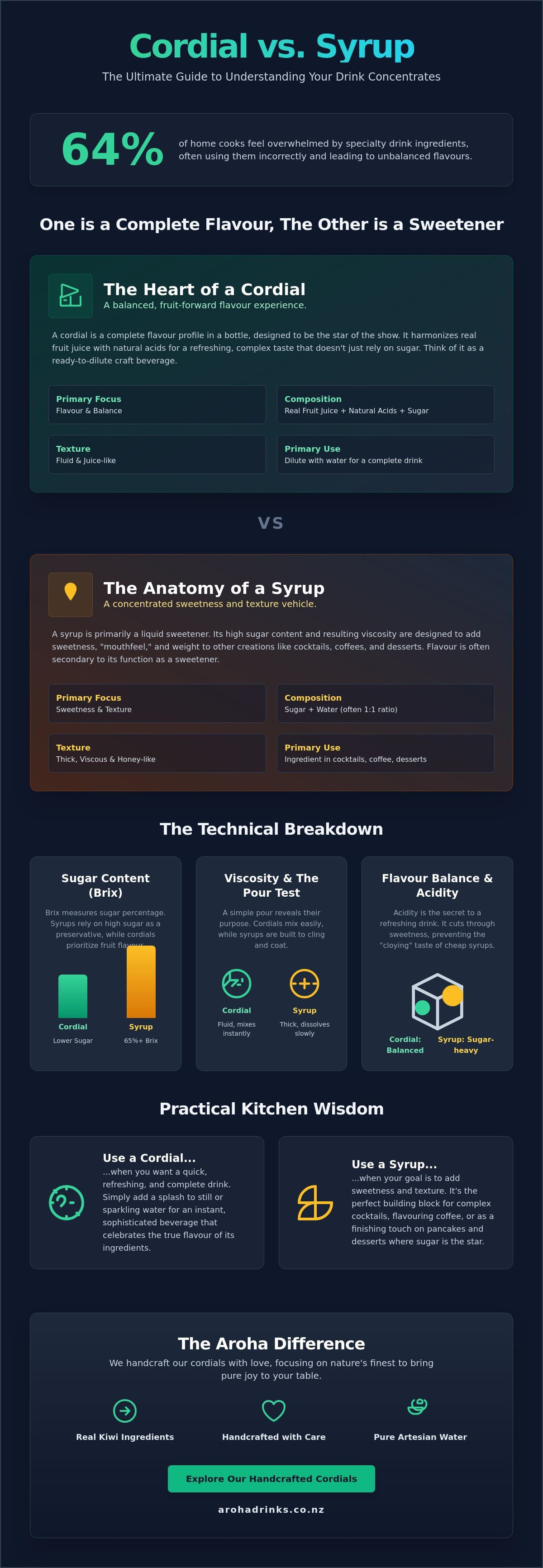
Walking through a Kiwi pantry, you will likely find both bottles sitting side by side. They look similar, but their DNA is worlds apart. Understanding the difference between cordial and syrup starts with how they feel on your palate and what actually goes into the pot during production. At Aroha, we believe every drop should be made with love, focusing on nature's finest offerings rather than just liquid sugar. While both are concentrates, one is a sweetener and the other is a complete flavour profile.
The Anatomy of a Syrup
Syrups are the workhorses of the beverage world. Most traditional versions follow a strict simple syrup ratio, which is 1 part sugar to 1 part water. This creates a high-viscosity liquid designed to carry sweetness and texture. If you have ever wondered What is Syrup?, it is essentially a delivery vehicle for other flavours. In mixology, syrups provide "mouthfeel," that silky weight that makes a drink feel luxurious. They act as a blank canvas for herbs or spices, but the sugar remains the main character.
The Heart of a Cordial
Cordials offer a much more complex experience. While a syrup focuses on sweetness, a cordial is all about balance. It is a fruit-forward concentrate that blends real juice with natural acids like citric or tartaric acid. This acidity provides a refreshing edge that cuts through the sugar, creating a sophisticated drink base. You can taste the difference between cordial and syrup the moment you add water. A cordial is designed to be a stand-alone star. It does not need a complex cocktail recipe to shine; it just needs a splash of sparkling water.
The history of these drinks is just as rich as their flavour. Long before they reached our Canterbury Plains, cordials began as medicinal "heart" tonics in the 15th century. They were crafted to revive the spirit and aid digestion. We carry that artisanal tradition forward by handcrafting our blends with genuine care. We use real ingredients like Elderflower and Blackcurrant to ensure every sip celebrates Kiwi ingenuity. It is not just a drink base; it's pure joy in every sip, crafted to bring people together over something truly wholesome.
The Technical Breakdown: Sugar, Acid, and Texture
Understanding the difference between cordial and syrup starts with the sugar bowl. Syrups are the heavy hitters of the sweetener world. They usually reach a Brix level, which measures sugar percentage, of 65% or higher. This intense concentration creates a long shelf life because the sugar acts as a primary preservative. Cordials take a gentler approach. They focus on the fruit first, often sitting at a lower sugar concentration. While cordial and syrup are two different types of sweeteners, cordials are designed for drinking rather than just sweetening. This lower sugar load allows the delicate notes of the fruit to stay front and centre.
The texture of these liquids tells a story of their purpose. Syrups are built for stability and high-volume use. Cordials are built for the glass. Because cordials contain more water and fruit juice, they feel brighter and more vibrant on the tongue. They don't coat the mouth with a heavy film. Instead, they offer a clean finish that makes you want another sip. It is a balance of science and craft that ensures the final drink feels like nature in a glass rather than a laboratory experiment.
Viscosity and the Pour Test
You can identify a syrup simply by watching it pour. It moves with a slow, honey-like flow that clings to the side of the glass. This thickness means syrups often struggle to dissolve in cold liquids without a lot of elbow grease. Cordials are different. They are fluid and juice-like. When you pour a natural cordial into a glass of chilled artesian water, it begins to mingle almost instantly. A light stir is all it takes to create a consistent drink. Visual clarity also plays a role. Many processed syrups are perfectly transparent because they use refined sugars and artificial flavours. A traditional fruit cordial often has a soft, natural cloudiness. This comes from the real fruit solids and antioxidants that we work hard to keep in the bottle.
The Role of Acidity in Flavour Balance
The biggest flavour difference between cordial and syrup is the "cloy" factor. Cheap syrups can feel sticky and overly sweet. This happens when there isn't enough acid to balance the sugar. Real fruit cordials use the natural acidity of the fruit to refresh the palate. Whether it is the tartness of a Canterbury blackcurrant or the zing of a feijoa, that acid cuts through the sweetness. It creates a crisp sensation that makes the drink feel light. In traditional cordial making, acidity acts as a natural preservative by creating an environment where spoilage-causing bacteria cannot thrive. This scientific necessity also happens to be the secret to a delicious, thirst-quenching beverage. If you are looking for that perfect balance of fruit and fizz, you can explore our range of natural cordials to find your new favourite flavour.
Why the Terms Are Often Used Interchangeably
Language creates a lot of the confusion. If you grew up in New Zealand, Australia, or the UK, "cordial" was likely a staple in your pantry. It is the bottle you reach for to turn plain water into something special. In the United States, the word "syrup" dominates. Americans typically associate syrup with maple on pancakes or vanilla pumps in a latte. This geographical divide is why many people struggle to spot the difference between cordial and syrup when browsing international recipes or shop shelves.
Then there is "squash." This term is common in British households. While often used as a synonym for cordial, squash traditionally refers to a drink with a slightly lower fruit juice content. It often contains comminuted fruit, which means the whole fruit including the peel is used. In Aotearoa, we tend to stick to the word cordial for our high-quality, fruit-forward concentrates. Understanding the difference between cordial and syrup helps you choose the right bottle for your afternoon refreshment or evening cocktail.
The Kiwi Connection: Cordial in the NZ Home
New Zealanders have a long, beautiful history of crafting drinks from the land. Many of us remember Nana’s kitchen smelling of stewed rhubarb or the delicate scent of freshly picked elderflowers. These traditional recipes are the heart of Kiwi cordial culture. We use what grows in our backyards. From the sharp tang of feijoa to the deep purple of Canterbury blackcurrants, these flavours are part of our identity. If you want to dive deeper into our most beloved floral infusion, check out this elderflower guide to see why it remains a local favourite. It is about capturing a season in a bottle.
Modern Mixology and Labeling Shifts
The lines get even blurrier in the world of high-end bars. Professional bartenders now create "acid-adjusted syrups" and frequently label them as cordials on cocktail menus. They do this because "cordial" sounds more sophisticated and artisanal. At the same time, some premium brands use the term "Fruit Syrup" on their labels to appeal to international markets or to suggest a thicker, more concentrated product.
Because there aren't strict legal definitions separating the two in New Zealand food labeling, the name on the front of the bottle matters less than the ingredients on the back. A true cordial should lead with real fruit and natural sweetness, not just sugar and water. Reading the label is the only way to know if you are getting a mass-produced concentrate or a bottle made with genuine care. Look for high fruit percentages and natural ingredients to ensure you are getting the best quality for your kitchen.
Practical Kitchen Wisdom: How to Use Each
Choosing the right bottle shouldn't be a guessing game. It's about knowing what you want to achieve in the glass or on the plate. Understanding the difference between cordial and syrup helps you master your home bar and your kitchen. Reach for a cordial when you want the drink to be the hero. Reach for a syrup when you need a concentrated burst of sweetness to balance other bold flavours.
Our natural cordials are big on flavour and small on waste. Because they're packed with real fruit, they require a bit of respect when mixing. A standard 1:10 ratio works beautifully for a light, refreshing sip. If you prefer a more intense experience, a 1:6 ratio brings those traditional New Zealand flavours to the front. These ratios ensure the pure artesian spring water we use has space to carry the fruit's natural edge without becoming cloying.
Safety and care go hand in hand with artisan products. Since our concentrates are crafted with love and free from harsh preservatives, they're best kept tucked away in the fridge. Once you've popped the seal, aim to enjoy that refreshing goodness within 4 to 6 weeks. This ensures every drop tastes as vibrant as the day it was bottled on the Canterbury Plains.
Mixing the Perfect Refreshment
Creating a natural soda at home is pure joy in every sip. Start with a base of chilled sparkling water and gently stir in your cordial. It's soft drinks, elevated. When you're working with cocktails, the secret is restraint. Use syrups as a sweetening agent rather than the bulk of the liquid. This prevents the sugar from overpowering the delicate botanicals in your gin or the smoky notes in a fine whiskey. For a bit of Kiwi ingenuity at your next party, check out these NZ drink recipes for cocktails and mocktails.
Cooking and Baking with Concentrates
Concentrates aren't just for the glass; they're a secret weapon for the adventurous baker. Drizzling a zesty fruit cordial over a fresh Pavlova or a bowl of thick Greek yogurt adds an instant artisan touch. The acidity in the fruit helps balance the rich cream. If you're roasting seasonal stone fruits, use a syrup to create a glossy, flavorful glaze. It also makes a wonderful soak for sponge cakes, keeping them moist and fragrant for days. You can substitute two tablespoons of cordial for two tablespoons of fresh citrus juice in most recipes to provide a more consistent and concentrated flavour profile.
Ready to bring nature's finest offerings into your home? Explore our range of handcrafted cordials made with love.
The Aroha Difference: Crafted with Love and Nature
Understanding the difference between cordial and syrup is the first step toward creating better drinks at home. At Aroha, we’ve positioned our range as the perfect bridge between these two worlds. We take the high fruit content and natural profile of a traditional cordial and pair it with the refined, intense quality often found in premium syrups. Our drinks aren't just mixers; they're a celebration of nature's finest offerings. Every drop is designed to bring a sense of comfort and genuine joy to your glass.
The foundation of every bottle is pure artesian water sourced directly from the Canterbury Plains. This water is filtered naturally through layers of rock and sand over many years, resulting in a crispness that mass-produced drinks simply can’t replicate. We follow a "Made with Love" philosophy. This isn't just a marketing slogan. It means we work in small batches, using real ingredients and traditional techniques. We don't rush the process. We let the fruit speak for itself, ensuring that what you pour is as close to nature as possible.
Big on Flavour, Small on Waste
Efficiency matters to us as much as taste. One 500ml bottle of Aroha cordial creates 3 litres of refreshing goodness. It’s a concentrate that packs a punch. When you choose our bottles, you're making a conscious choice for the environment. You're effectively replacing six 500ml ready-to-drink plastic bottles with a single glass one. This significantly reduces plastic waste and the carbon emissions associated with shipping heavy, water-filled drinks across New Zealand. If you’re curious about how we maintain this balance of intensity and purity, you can read more about what is cordial and the history of our craft.
From the Canterbury Plains to Your Glass
We take pride in celebrating Kiwi ingenuity through our unique flavour profiles. We focus on traditional New Zealand favourites like Rhubarb, Feijoa, and Elderflower. These aren't just flavours; they're memories of New Zealand summers captured in glass. By sourcing locally and supporting New Zealand makers, we ensure that every sip supports our local economy and our land. Sourcing from our own backyard means the fruit is fresher and the story is more authentic.
We believe that artisanal quality beats mass-produced fizz every time. You won't find artificial colours or chemical preservatives here. Instead, you'll find the genuine difference between cordial and syrup that has been handcrafted with care. It's time to treat your glass to something real. Experience the Aroha difference with a handcrafted bottle today and taste the love in every sip.
Elevate Your Next Refreshing Pour
Understanding the real difference between cordial and syrup changes how you stock your pantry and mix your drinks. Syrups focus on a heavy sugar hit and viscous texture, while a high quality cordial balances fruit juice with a bright, acidic finish. We believe your drinks should feel like a celebration of nature. That's why we craft our range with pure artesian spring water and nothing artificial. Each 500ml bottle is big on flavour and small on waste, making 3L of delicious drink to share with the people you love. You get the honest taste of New Zealand fruit without any artificial colours or flavours getting in the way. It's simple, authentic, and crafted with care on the Canterbury Plains. Whether you're mixing a summer soda or a warming winter treat, choosing the right base makes all the difference. We invite you to taste the passion we pour into every batch.
Discover our range of handcrafted fruit cordials and syrups, made with love in NZ.
Grab a glass and enjoy the pure joy of nature's finest offerings.
Frequently Asked Questions
Is cordial the same as simple syrup?
No, cordial isn't the same as simple syrup. Simple syrup is a basic mixture of sugar and water used primarily for sweetening drinks without adding extra flavour. Our cordials are crafted with care using real fruit, botanicals, and pure artesian water. The main difference between cordial and syrup is that cordials provide a complex, tart, and aromatic profile rather than just sweetness.
Can I use syrup instead of cordial in a drink recipe?
You can swap them, but your drink's flavour will change significantly. Syrups are heavy and focused on sugar content, which can make a cocktail feel cloying. Cordials bring a balanced acidity and the essence of nature's finest offerings. If you use syrup instead of a fruit cordial, you'll miss out on the refreshing goodness and bright fruit notes that define a well made drink.
Do cordials need to be refrigerated after opening?
Yes, you should keep your natural cordials in the fridge once they're open. Because we use real ingredients and avoid harsh artificial preservatives, the cold helps protect the delicate flavours. Keep your bottle at a temperature between 1 and 4 degrees Celsius. This care ensures that every pour stays fresh and captures the pure joy of the Canterbury Plains.
What is the best ratio for diluting fruit cordial?
The best ratio for a perfect drink is 1 part cordial to 6 parts water. For a standard 210ml serving, mix 30ml of cordial with 180ml of chilled or sparkling water. This 1:6 dilution is the sweet spot for most Kiwi palates. It allows the traditional New Zealand flavours, like Feijoa or Blackcurrant, to shine through without being too intense or sugary.
Are cordials healthier than traditional soft drinks?
Natural cordials are a wholesome alternative to mass produced sodas. Traditional soft drinks often contain 10.6g of sugar per 100ml and various artificial additives. By using a natural cordial, you control the dilution and the sugar intake. You're enjoying handcrafted quality made with real fruit juice rather than synthetic flavourings. It's a simple way to enjoy soft drinks, elevated.
Can I use Aroha cordials in a SodaStream?
You can definitely use our cordials with a SodaStream. Always carbonate your plain water first before adding the cordial to the bottle. Adding the concentrate before carbonating can cause the liquid to fizz over and create a sticky mess. Use about 30ml of cordial for every 200ml of sparkling water to create a refreshing beverage that celebrates Kiwi ingenuity.
What is the difference between squash and cordial?
The primary difference lies in the fruit solids and clarity. Squash typically contains fruit pulp and has a thicker, cloudier appearance. Cordials are strained and refined to be clear, making them ideal for elegant cocktails and mocktails. Understanding the difference between cordial and syrup or squash helps you pick the right mixer. Cordials offer a more sophisticated, artisanal experience for your guests.
How long does a bottle of natural cordial last?
An unopened bottle of natural cordial stays fresh for 12 months from its production date. Once you've opened the bottle, it should be consumed within 4 to 6 weeks. Since we focus on small scale production and natural ingredients, the flavours are best when fresh. Always check the best before date printed on your 500ml bottle to ensure you're getting the highest quality sip.