

Is Drinking Cordial Bad for You? The Truth About Fruit Syrups in 2026
What if your daily glass of water could feel like a small, sun-drenched celebration rather than a chore? Many of us stand in our kitchens, bottle in hand, wondering is drinking cordial bad for you or if we're undoing our health goals with a single splash of flavor. It's a common struggle. You crave the bright taste of real fruit but feel a shadow of guilt about the sugar. We understand that tug-of-war. You want to nourish your body while still savoring the simple, artisanal joys of a refreshing drink.
The truth is that not all syrups are created equal. With the 2026 shift toward mandatory Health Star Ratings in New Zealand, it's becoming easier to see what's actually inside those bottles. You don't have to choose between boredom and bad habits. This article offers a gentle permission slip to enjoy cordial as part of a balanced, beautiful lifestyle. We'll show you how to look past confusing "sugar-free" labels to find syrups crafted with care and honest, natural ingredients. You'll discover how a mindful pour can turn daily hydration into a moment of pure, heartfelt affection for your well-being.
Key Takeaways
- Discover why the answer to is drinking cordial bad for you depends on the quality of your ingredients and the mindfulness of your pour.
- Learn to spot artificial "red flags" like synthetic colours and sweeteners, ensuring your glass is filled with nature’s best.
- Master the 1:10 dilution ratio to create a light, refreshing drink that offers more control than pre-packaged sodas.
- Pair artisanal fruit syrups with sparkling water to turn simple hydration into a joyful, wholesome experience.
- See how choosing regional, craft-made cordials ensures your drink is prepared with genuine affection and honest ingredients.
Is Drinking Cordial Bad for You? The Truth About Fruit Syrups
Pure water is a gift from the earth. Sometimes, we want a little more. A splash of color. A hint of sun-ripened fruit. That is where cordial comes in. It is a concentrated fruit syrup, crafted to be shared across many glasses. In many parts of the world, people know this tradition as Squash (drink). It is not a beverage you drink straight from the bottle. Instead, it is a vibrant base designed for high dilution. It is meant to be stretched, savoured, and enjoyed slowly.
Many people worry about the sweetness in their glass. They ask, is drinking cordial bad for you? The answer is rarely a simple yes or no. It depends on the bottle you choose and how you pour it. A small splash in a tall glass of sparkling artesian water is very different from a factory-made soda. It is about balance. It is about choosing quality over mass-produced shortcuts. When you use a syrup made with real fruit and care, you are treating yourself to an artisanal experience rather than just a sugar hit.
Drinking two litres of plain water every day can feel like a chore. Boredom often leads to dehydration. This is where the "hydration hack" comes in. A tiny amount of honest flavour can change everything. It makes staying hydrated a joy. You drink more because you genuinely enjoy the experience. This simple shift helps many people reach their daily water goals without feeling deprived. It turns a routine task into a moment of heartfelt affection for your body.
The Role of Sugar in Traditional Cordials
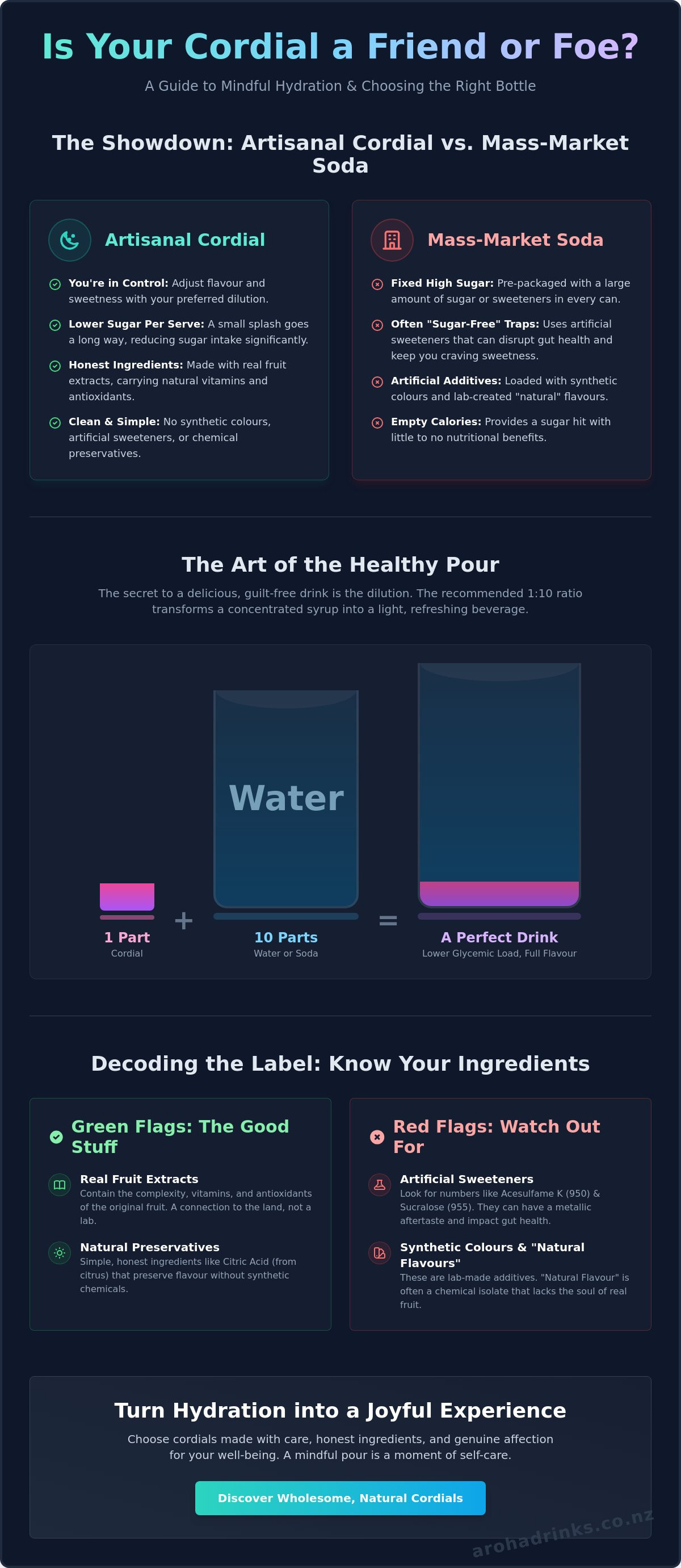
Sugar often gets a bad reputation. Historically, it was a beautiful and necessary thing. It acted as a natural preservative. It captured the essence of summer berries so they could be enjoyed all year round. We must look at the "per serve" numbers rather than the whole bottle. A 1:10 dilution ratio changes the story completely. This high level of water significantly lowers the glycemic load. It makes the drink much gentler on your system than pre-packaged alternatives. It is a mindful way to enjoy a traditional treat.
Hydration vs. Nutrition: A Balanced View
Can a flavoured drink help you reach your 2-litre daily goal? Absolutely. Variety keeps our palates interested. When we enjoy what we drink, we stay consistent with our habits. It is a psychological win for a healthy lifestyle. There is a clear line between a daily habit and an occasional indulgence. Choosing syrups with natural ingredients makes that daily habit much kinder. Cordial should be viewed as a tool for hydration rather than a primary calorie source.
Decoding the Label: Natural vs. Artificial Ingredients
Nature is honest. Labels should be too. When you pick up a bottle, you deserve to know exactly what is going into your glass. Many mass-produced syrups hide behind complex numbers and scientific names. These are the "red flags" that often lead people to wonder, is drinking cordial bad for you? Synthetic colours and chemical preservatives might keep a bottle on a shelf for years. They don't belong in a wholesome lifestyle. Traditional makers use simple things. Citric acid from citrus fruits. Real fruit juices. These are the markers of a product made with genuine affection for the craft.
The term "Natural Flavour" can be a bit of a trick. In the world of mass production, it often refers to a flavouring that started in nature but was processed until it became a chemical isolate. It lacks the soul of the original fruit. Real fruit extracts are different. They contain the complexity of the soil and the sun. When you choose a syrup with honest ingredients, you're choosing a connection to the land. It is a more sincere way to hydrate.
The Hidden Cost of Artificial Sweeteners
Many supermarket brands use sweeteners like Acesulfame Potassium (950) or Sucralose (955). They promise zero calories but often come with a hidden cost. These synthetic additives can disrupt the delicate balance of your gut health. They also keep your brain craving intense sweetness. This makes it harder to enjoy the subtle, natural flavours of a ripe strawberry or a tart lemon. Natural sugar, used mindfully, provides a cleaner taste without the lingering, metallic aftertaste of lab-grown alternatives. Health authorities suggest you limit your intake of drinks containing added sugar; choosing a natural cordial allows you to do this by controlling your own dilution.
Why Real Fruit Extracts Matter
Real fruit is a powerhouse of goodness. When a cordial is made with real blackcurrants or rosehips, it carries the vitamins and antioxidants nature intended. These aren't just "flavours" created in a test tube. They are the essence of the Canterbury Plains and our local orchards. Small-batch production ensures these delicate nutrients aren't lost in high-heat processing. Elderflower, feijoa, and rhubarb offer more than just a sweet treat. They bring a sensory experience that synthetic syrups simply can't match. Real fruit pulp provides trace nutrients missing from synthetic syrups. It creates a drink that feels as good as it tastes. If you are looking for a more authentic experience, you might explore handcrafted fruit syrups that celebrate these natural profiles and the passion of the makers.
Comparing the Fizz: Cordial vs. Traditional Soft Drinks
Choice is a beautiful thing. When you open a pre-packaged soda, the decision has already been made for you. The sugar. The intensity. The carbonation. It is all fixed by a factory machine. Fruit syrups offer something different. They give you the power of the pour. You decide the strength. You decide the sweetness. This personal control is one reason why the question is drinking cordial bad for you often leads back to your own kitchen counter. A light, floral touch in a tall glass of water is a world away from the heavy, syrupy hit of a commercial soft drink. It is a more mindful way to sip.
Acidity is another quiet concern. Many traditional soft drinks rely on harsh acids to create that familiar bite. These can be tough on dental enamel over time. Diluted cordials are mostly water. They carry the gentle, natural acidity of the fruit rather than the phosphoric acid found in many mass-market cans. It is a kinder experience for your teeth. By choosing a high dilution, you are prioritising your well-being without losing the joy of a refreshing drink.
Sugar Per Serve: The Real Numbers
The numbers tell a sincere story. A standard 330ml can of cola often contains about 35 to 40 grams of sugar. That is nearly ten teaspoons in one go. In contrast, a 330ml glass of natural cordial mixed at a 1:10 ratio usually contains significantly less. You can even stretch it further to a 1:15 mix for a mere hint of fruit. Most craft syrups use honest sugar rather than high-fructose corn syrup. This means your body processes the sweetness more naturally. You aren't just drinking; you are choosing exactly how much energy you want to consume.
The Environmental and Health Synergy
Caring for yourself and caring for the land often go hand in hand. One bottle of concentrated syrup can replace ten or fifteen plastic soda bottles. It is a simple way to reduce your footprint. By using a reusable bottle and pure artesian water, you create a sustainable habit that feels good. Choosing "craft" over "mass-market" also means supporting better ingredient sourcing. It is about quality over quantity. If you want to dive deeper into this tradition, you can read more in our guide: What is Cordial? A Complete Guide to Natures Flavourful Drink Base. It is a journey into the heart of what makes these drinks so special. Is drinking cordial bad for you? Not when it is crafted with affection and enjoyed with a sense of balance.
The Art of the Healthy Pour: Tips for Mindful Mixing
Creating a drink should be a ritual of care. It is a moment to pause. When you pour with intention, you transform a simple glass into a sensory experience. Many people worry and ask, is drinking cordial bad for you, but the secret often lies in the mastery of the pour. A gentle hand leads to a better balance. By embracing the "less is more" philosophy, you allow the true essence of the fruit to shine through without overwhelming your palate with sweetness. It is a more sincere way to enjoy nature's bounty.
Sparkling artesian water is the perfect companion for natural syrups. The crisp bubbles lift the floral notes of elderflower or the deep tartness of blackcurrant. This combination creates a "mock-soda" that is wholesome and refreshing. You don't need synthetic additives to enjoy a festive fizz. Adding fresh garnishes like a sprig of bruised mint, a thin slice of cucumber, or a twist of lemon zest elevates the drink further. It adds a layer of garden-fresh aroma that no factory-made beverage can replicate. These small touches show affection for your guests and yourself.
Your fruit syrups can travel beyond the glass. They are wonderful culinary tools for the creative home cook. A drizzle of rhubarb syrup over poached pears adds a deep, regional flavour. A splash of ginger syrup in a winter marinade brings a gentle, warming heat. It is about using these artisanal creations to bring joy to every part of your kitchen. If you are ready to start your own ritual, you can explore our collection of natural fruit syrups to find your new favourite flavour.
Creative Mixing Ideas
Sophistication doesn't require alcohol or high sugar. Try blending a small amount of cordial with chilled herbal teas like hibiscus or chamomile. It creates a complex base that feels special. Rhubarb or ginger cordials are particularly good for spicing up plain sparkling water on a quiet afternoon. For more inspiration, check out these NZ Drink Recipes: 15+ Cocktails & Mocktails with a Kiwi Twist. They celebrate local ingenuity with every sip.
Dilution Ratios for Different Occasions
Consistency is the heart of a healthy lifestyle. Using a measuring jigger helps you stay aligned with your health goals. It removes the guesswork and ensures every glass is just right.
- The Daily Hydrator (1:15): A whisper of fruit for constant, refreshing sipping throughout the day.
- The Party Sparkler (1:7): A bolder, more celebratory profile for special gatherings and toasts.
Choosing Better: Why Natural, NZ-Made Cordials Stand Out
Aroha is more than just a name. It is our foundation. It means affection, and it is the primary ingredient in every bottle we craft. When people wonder is drinking cordial bad for you, they are often picturing industrial syrups made in massive factories. Those products rely on speed and scale. We choose a different path. Our process is unhurried. We believe that the care put into production is something you can actually taste. It is the difference between a commodity and a craft.
The Canterbury Plains provide us with a rare gift. Pure artesian water. This water has travelled through layers of earth, filtered by nature itself. It is the perfect, neutral canvas for our fruit syrups. We combine this purity with traditional flavours that celebrate our Kiwi heritage. Feijoa, with its aromatic soul. Elderflower, with its delicate, floral grace. These aren't just flavours. They are memories of New Zealand summers and orchard walks. They ground our drinks in a specific time and place.
Small-batch production allows for a level of attention that industrial processing simply cannot match. We see every bottle. We know every batch. This artisanal status means we don't have to compromise on quality to meet a corporate quota. We use:
- Real fruit and flowers sourced from local growers.
- Pure artesian water from our regional landmarks.
- Traditional methods that respect the integrity of the ingredients.
- Honest processes without the need for synthetic shortcuts.
Nature in a Bottle
We choose the wild over the laboratory. Real fruit and flowers offer a depth of flavour that synthetic isolates can never replicate. Our Elderflower is a labour of love. We hand-pick the blossoms when they are at their peak, capturing the fleeting scent of the season. This hands-on approach ensures that the "good stuff" from nature stays in the bottle. You can learn more about this special blossom in our guide, Elderflower: A Guide to New Zealands Favourite Floral Flavour. It is a celebration of one of our most beloved ingredients.
Making the Switch to Craft
Transitioning from supermarket brands to high-quality fruit syrups is a simple act of self-care. It is about choosing quality over quantity. Start by replacing one mass-market bottle with an artisanal alternative. Notice the difference in the aroma. Feel the lack of a chemical aftertaste. By supporting local NZ ingenuity, you are also looking after your own wellbeing. You are choosing a drink that aligns with a balanced, wholesome lifestyle. Is drinking cordial bad for you? Not when it is made with sincerity and sourced from the land we love. If you are ready to taste the difference, we invite you to explore our range of handcrafted natural cordials and find a flavour that speaks to you.
Savour the Sweetness of a Mindful Life
Choosing a refreshment shouldn't feel like a compromise. You now know that the question is drinking cordial bad for you depends entirely on what's in the bottle and how you pour it. By opting for high dilution and steering clear of synthetic additives, you turn simple hydration into a joyful ritual. It's about honesty. It's about choosing real fruit and flowers that have been treated with genuine care. When you control the mix, you control your wellbeing.
Our syrups are a labor of love. We use pure artesian water from the Canterbury Plains to ensure every drop is as clean as the land itself. From hand-picked Elderflower to traditional NZ flavours, we focus on what's real. There are no artificial colours or flavours here. Just the sincere essence of nature, crafted with affection for your table. Each small batch is a testament to our passion for the craft and our respect for the soil.
Take a moment to celebrate the simple things. You deserve a drink that nourishes your soul and delights your palate. Shop our handcrafted, natural NZ fruit cordials today. It's a beautiful way to bring the heart of nature into your home.
Frequently Asked Questions
Is cordial better for you than juice?
Cordial offers more control over your sugar intake because you decide the dilution ratio. While fruit juice contains natural vitamins, it also carries a high concentration of sugar and calories in every glass. By mixing a natural syrup at a 1:10 or 1:15 ratio, you create a much lighter drink. It is a more mindful way to enjoy fruit flavours without the heavy glycemic load of traditional juice.
Does cordial dehydrate you because of the sugar?
No, a properly diluted cordial actually aids hydration by making water more palatable. Since a standard serve is mostly pure water, it helps meet your body's daily fluid needs. The small amount of syrup provides a hint of nature that encourages you to drink more throughout the day. It turns a routine task into a gentle, sensory pleasure that keeps your system well-hydrated and happy.
Can I drink cordial every day if I dilute it heavily?
You can certainly enjoy heavily diluted cordial every day as part of a wholesome lifestyle. When people ask is drinking cordial bad for you, the answer depends on the quality of the ingredients you choose. Selecting syrups made with real fruit and no synthetic additives makes it a kind habit. A 1:15 ratio provides a whisper of flavour that supports your hydration goals with heartfelt simplicity.
Are sugar-free cordials actually healthy?
Sugar-free options aren't always the best choice because they often rely on synthetic sweeteners like sucralose or acesulfame potassium. These lab-grown additives can disrupt gut health and keep your palate craving intense, artificial sweetness. We believe in the honesty of nature. A small amount of natural sugar, used mindfully and diluted well, is often a more sincere way to enjoy a treat without relying on chemical shortcuts.
What is the healthiest flavour of cordial to choose?
The healthiest choices are flavours crafted from nutrient-dense fruits like blackcurrant, rosehip, or elderberry. These fruits are naturally rich in antioxidants and vitamins that support your wellbeing. When these ingredients are handled with care in small batches, they retain more of their natural goodness. Look for deep colours that come from real fruit extracts rather than synthetic dyes to ensure you're getting the best from the earth.
Is cordial bad for children’s teeth?
High sugar and acidity can impact dental health, but using a high dilution ratio significantly reduces the risk. Teaching children to enjoy a 1:15 "hint of fruit" mix is much gentler on their enamel than giving them undiluted juice or fizzy sodas. Natural syrups made without harsh synthetic acids are also a kinder choice. It's about building balanced habits early with a sense of genuine care for their smiles.
How long does natural cordial last once opened?
Natural cordial typically stays fresh for three to six months if you keep it tucked away in the refrigerator. Because we use traditional methods and simple ingredients, the syrup needs the cool air to maintain its integrity. Always check the label for specific guidance on your favourite flavour. Keeping the bottle chilled preserves the bright, artisanal taste and the honest fruit extracts we've bottled with such affection.
Can I use cordial if I am on a low-carb or keto diet?
You can include cordial in a low-carb lifestyle if you use a very high dilution ratio to keep the carb count minimal. Since is drinking cordial bad for you is often a question of portion size, a tiny splash in a large bottle of water fits well within most goals. It provides the flavour variety that many people find helpful when following restricted diets. It's a small, heartfelt way to make staying hydrated feel like a special experience.