

How Long Does Cordial Last Once Opened? A Guide to Freshness
Last Tuesday, a local customer reached out because they found a half-full bottle of Elderflower syrup tucked behind the milk, wondering if those handpicked Canterbury flavours were still safe to sip. It's a common worry for anyone who appreciates quality ingredients. You don't want to pour a handcrafted product down the sink, but the fear of mould or a sour taste is real. Understanding how long does cordial last once opened is the best way to enjoy your drinks with total peace of mind while honouring the care that went into every bottle.
This guide helps you discover exactly how long those vibrant New Zealand flavours stay fresh in your fridge. We promise to clear up the confusion between 'best before' and 'expiry' dates so you can stop second-guessing your pantry. You will get a clear timeline for freshness, a visual guide to spotting spoilage, and three simple storage tips to help your favourite 500ml bottle last for its full 4 week shelf life after the seal is broken.
Key Takeaways
- Learn exactly how long does cordial last once opened and why the fridge is the secret to preserving those natural fruit flavours.
- Discover the simple sensory checks, like the "Fizz Test," to identify signs of spoilage or unintended fermentation before you take a sip.
- Master two easy habits—wiping the bottleneck and tightening the cap—to prevent mould and keep your handcrafted syrups tasting fresh.
- Understand the difference between "Best Before" dates and actual shelf life to ensure your New Zealand-made treats stay safe and delicious.
- Explore how small-batch production and 500ml bottles help minimize waste while delivering pure joy in every sip.
How Long Does Cordial Last Once Opened? The Quick Answer
You’ve just popped the cap on a bottle of handcrafted syrup and want to know: how long does cordial last once opened? For most natural cordials, the sweet spot is 1 to 4 months when stored in the refrigerator. While mass-produced supermarket versions might sit in a pantry for a year, artisanal drinks behave differently because they lack the heavy chemical stabilisers found in industrial alternatives.
It's easy to get confused by the "Best Before" date printed on the glass. That date refers to the unopened shelf life, often up to 12 months from the bottling date. Once the seal is broken, oxygen enters the bottle and the clock starts ticking. We rely on a high concentration of sugar to act as a natural preservative, which keeps the drink safe and delicious without the need for artificial nasties.
Different flavours have slightly different lifespans. Use this quick reference for your fridge:
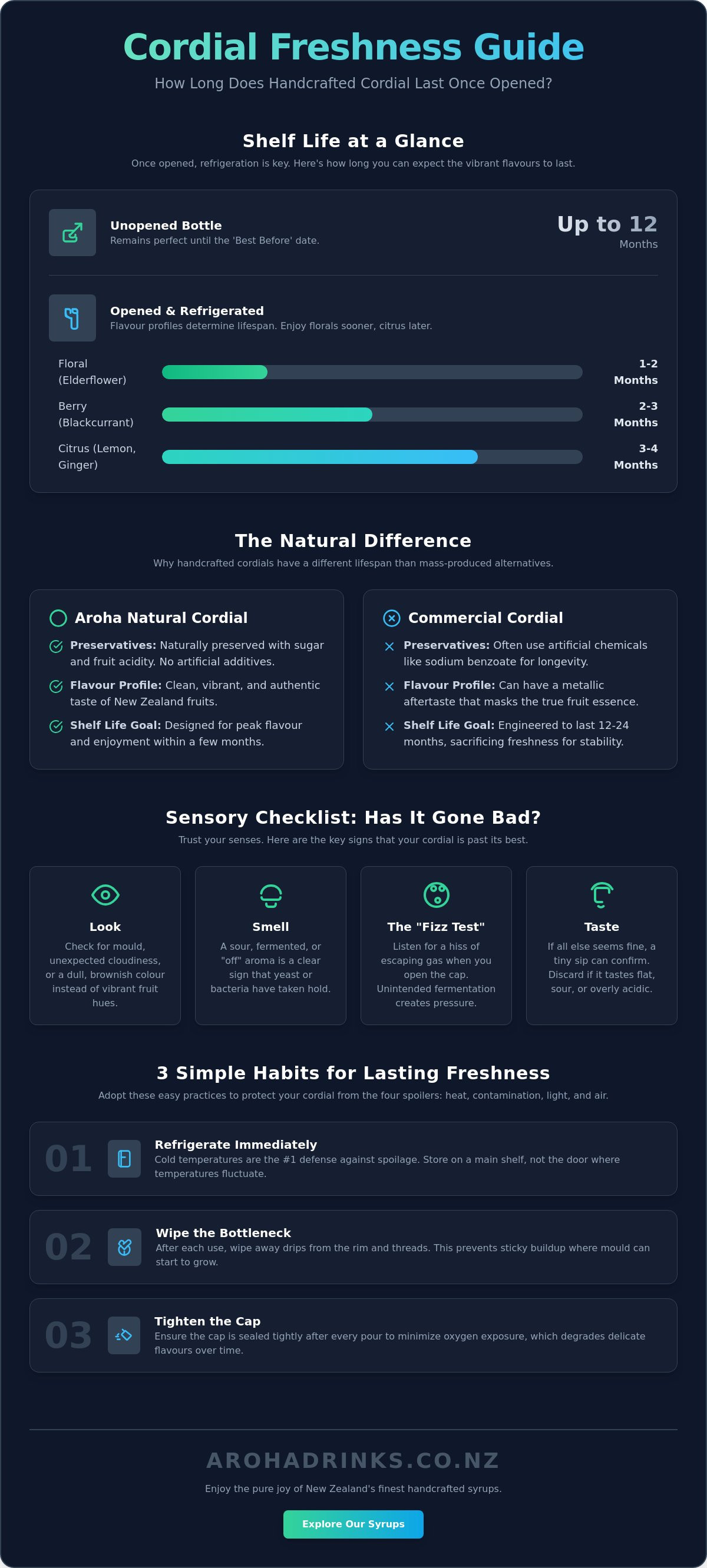
- Citrus (Lemon, Lime, Ginger): 3 to 4 months. High acidity helps preserve the bite.
- Berry (Blackcurrant, Raspberry, Feijoa): 2 to 3 months. These delicate fruits are best enjoyed sooner.
- Floral (Elderflower, Rhubarb): 1 to 2 months. These aromatics are the most sensitive to time.
Natural vs. Commercial Cordials
At Aroha, our "Made with Love" philosophy means we prioritise the integrity of the fruit over a decade-long shelf life. Commercial cordials often use artificial preservatives like sodium benzoate or potassium sorbate. These chemicals extend the life of the liquid to 12 or 24 months, but they often leave a metallic aftertaste that masks the true essence of the ingredients.
Our artisanal approach uses traditional methods. We use the natural preserving power of sugar and the inherent acidity of New Zealand grown fruit. This creates a cleaner, more vibrant flavour profile that celebrates Kiwi ingenuity. You aren't just drinking a sugar syrup; you're tasting the Canterbury Plains. Because we don't use those heavy chemicals, your 500ml bottle of Aroha is designed to be enjoyed while the fruit notes are still singing.
The 3-Month Rule for Peak Flavour
Freshness is about more than just safety. Even if a syrup is technically "safe" to drink after 5 months, the delicate aromatics begin to fade. If you want to understand what makes these ingredients so special, check out our guide on what is cordial to see how we balance these natural elements. To ensure you're getting the best experience, we recommend the 3-month rule for how long does cordial last once opened.
To stay on top of your fridge inventory, try the masking tape trick. Stick a small piece of tape on the side of the bottle and write the date you opened it with a permanent marker. This simple habit ensures you never have to guess if that Rhubarb or Elderflower is still at its peak. You’ll always know exactly when it’s time to finish the bottle and share a refreshing glass with friends.
Factors That Influence How Fast Your Syrup Spoils
Once you break the seal on a bottle of handcrafted syrup, nature begins its work. The environment in your kitchen dictates the lifespan of your drink. Heat is the primary enemy. A warm Kiwi pantry encourages yeast to ferment the sugars, which can ruin the profile of a premium syrup. Contamination is another silent spoiler. Using a spoon that touched your tea or allowing "backwash" to enter the bottle introduces microbes that thrive in sugary liquids.
Light exposure and oxygen also play significant roles. UV rays break down natural pigments in fruit, often turning a vibrant red syrup into a dull brown over time. Oxygen causes oxidation, which alters the delicate flavour profile of botanical extracts. To get the best out of your bottle, you must manage these four elements: temperature, cleanliness, light, and air. Understanding these factors helps you determine how long does cordial last once opened in your specific home environment.
Why Refrigeration is Non-Negotiable
Sugary environments are breeding grounds for bacteria once exposed to air. Cold temperatures slow this microbial growth significantly. Research from the Penn State Extension suggests that even simple fruit syrups stay fresh for about 3 weeks when kept cold. For the best results, keep your bottle on the middle or bottom shelf of the fridge. Avoid the door. The temperature there fluctuates every time you reach for the milk. This constant change can stress the syrup and shorten its life.
The Impact of Fruit Acidity
High acidity acts as a natural preservative. Flavours with a lower pH, such as Rhubarb or Lemon, create a harsh environment for spoilage organisms. These tart varieties often stay fresh for a few extra days compared to low-acid blends. In contrast, delicate floral options like elderflower are more sensitive. These lighter syrups require extra care to maintain their subtle notes.
The pH level acts as a secondary barrier to spoilage, but it isn't a total shield. Even the zestiest lemon syrup will eventually succumb to the air. If you want to experience the best of these natural flavours, explore our range of handcrafted cordials made with love in New Zealand. We use pure ingredients that deserve the best storage practices to keep them tasting exactly as we intended. Knowing how long does cordial last once opened ensures every glass you pour is as refreshing as the first.
Signs Your Cordial Has Gone Bad: A Sensory Checklist
Nature provides us with beautiful, vibrant colours, but they aren't meant to last forever. When you are wondering how long does cordial last once opened, your own senses are the most reliable tools in the kitchen. We craft our drinks with real ingredients, which means they behave like fresh produce. A bottle of elderflower or blackcurrant should look clear and inviting. If you notice a "fuzzy" growth on the surface, that is mould. This happens when the natural fruit sugars react with the air over time. It is a clear signal that the bottle's journey has come to an end.
The "Fizz" test is another essential check. Our cordials are still, not sparkling. If you open the cap and hear a pressurized hiss or see tiny bubbles rising, the liquid has likely fermented. This unintended fermentation occurs when wild yeasts enter the bottle. It transforms the sweet, floral notes into something sharp and yeasty. You should also watch for colour degradation. A bright, ruby-red hibiscus cordial might turn a dull, muddy brown. This oxidation shows the fresh Kiwi ingredients have moved past their best. While it might not always be harmful, the joy of the flavour is gone.
Identifying Mould vs. Natural Fruit Sediment
Because we use real fruit extracts, you might see some settling at the bottom of your bottle. Don't worry, this is often just the natural pulp and goodness. Use the "Swirl Test" to be sure. Gently tip the bottle. Natural sediment will dissolve back into the liquid smoothly. Mould is different. It usually floats on top or clings to the neck of the bottle in stubborn clumps. Never try to scrape mould off and drink the rest. Microscopic spores can inhabit the entire bottle long before you see them. It is always better to stay safe.
The Sniff and Sip Protocol
Before you pour a glass to share, take a deep breath. A healthy cordial should smell like a summer garden in the Canterbury Plains. If you detect vinegary notes or a sour, pungent aroma, the product is no longer fresh. Understanding the signs of spoilage helps you distinguish between a drink that is just old and one that is truly off. If the scent is fine but you remain unsure, try a tiny sip. A "faded" flavour means the intensity has dropped, but a "spoiled" flavour will taste metallic or unpleasantly tart. To ensure the best experience, remember the golden rule: when in doubt, throw it out. Knowing how long does cordial last once opened helps you enjoy every drop while it is still pure joy in a glass.
How to Maximize the Shelf Life of Your Fruit Syrups
Treating your handcrafted syrups with care ensures that every glass tastes like it was just bottled on the Canterbury Plains. We put a lot of love into our recipes. Taking a few extra seconds during your pour preserves that artisanal quality. Knowing exactly how long does cordial last once opened is only half the battle; the rest is about how you handle the bottle.
First, wipe the bottleneck after every single use. This simple habit prevents a sticky sugar crust from forming. Sugar residue is a magnet for wild yeast and mould. A quick wipe with a clean, damp cloth keeps the seal hygienic and easy to open next time.
Tighten the cap immediately after pouring. Oxygen is the enemy of botanical freshness. By sealing the bottle right away, you keep the vibrant fruit notes locked inside and prevent fridge odours from seeping in. It’s a small step that makes a big difference in maintaining that pure joy in every sip.
Store the bottle in the coldest part of your fridge. This is almost always the back of the middle shelf. Avoid the door racks. The temperature in the door fluctuates every time you reach for the milk, which can stress the natural ingredients. Keeping it at a steady, chilly temperature at the back ensures the syrup stays stable for longer.
Use a clean jigger or measuring spoon. Never pour your syrup into a spoon that has already touched other food or been in your mouth. Cross-contamination is the fastest way to spoil a bottle. Using a dedicated, clean tool keeps the environment inside the bottle pristine.
Can You Freeze Cordial?
Freezing is a brilliant way to preserve those botanical flavours if you can't finish the bottle in time. Use an ice cube tray for a smart preservation hack. Because of the high sugar content, the syrup might stay slightly tacky rather than freezing into a rock-solid block. These cubes are fantastic for dropping into sparkling water or using in these NZ drink recipes for a chilled summer treat.
Creative Ways to Use Up Cordial Before it Turns
Don't let a single drop of goodness go to waste. Drizzle a little Rhubarb or Ginger syrup over a bowl of New Zealand vanilla ice cream or a dollop of thick yoghurt. It’s an instant gourmet dessert. You can also incorporate the syrup into your baking as a moistening glaze for citrus cakes. For a quick kids' treat, mix the syrup with gelatin to create homemade cordial gummies. They are simple to make and pack a punch of real fruit flavour.
Understanding how long does cordial last once opened helps you enjoy our drinks at their peak. If you are ready to stock up on fresh, natural flavours, explore our range of handcrafted New Zealand cordials today.
The Aroha Difference: Freshness You Can Taste
At Aroha, we believe that what you put into your body should be crafted with intention. Our small-batch process in Canterbury is the heartbeat of our operation. By producing in limited quantities, we ensure that every bottle reaching your kitchen is as fresh as possible. This artisanal approach stands in stark contrast to mass-produced alternatives that sit in transit for months. When you consider how long does cordial last once opened, the answer is directly linked to the quality of the start. Freshness is our foundation.
We purposefully bottle our syrups in 500ml glass. It is the perfect size for freshness. This volume allows you to enjoy the full depth of our traditional New Zealand flavours without the risk of waste. Larger bottles often lose their aromatic punch before they are finished. Our 500ml size ensures you reach the bottom of the bottle while the fruit is still singing. It is big on flavour, but small on waste.
Our "Made with Love" promise means we use ingredients that deserve proper care. Whether it is the tart profile of our Blackcurrant or the nostalgic sweetness of Feijoa, these fruits are handled gently. Because we use real ingredients, they thrive when treated with the storage tips mentioned earlier in this guide. Knowing how long does cordial last once opened helps you respect the craft that goes into every drop.
Grounded in New Zealand Nature
Every bottle of Aroha starts with pure artesian spring water sourced from the Canterbury Plains. This provides a cleaner, crisper base that allows the fruit to shine. We embrace a natural edge. This means we avoid the heavy chemical stabilisers found in industrial syrups. While this results in a shorter shelf life than a laboratory-made drink, the trade-off is a more delicious, authentic taste. We proudly support local growers, channelling Kiwi ingenuity into every batch. It is a celebration of our land and its bounty.
Elevate Your Soda at Home
You can easily transform a simple glass of sparkling water into a premium experience. Our syrups are designed to pair perfectly with craft soda NZ principles, focusing on balance and botanical depth. There is a simple joy in a perfectly preserved, natural fruit drink shared with friends or enjoyed during a quiet moment. By following our storage advice, you keep those delicate notes of elderflower or ginger sharp and bright. Ready to taste the difference that love and local ingredients make? Explore our range of handcrafted cordials and syrups.
Savour Every Drop of Pure Refreshment
Keeping your drinks vibrant and delicious is simple when you follow the right storage steps. Always store your bottles in the refrigerator to maintain the integrity of the natural ingredients. Natural fruit cordials typically maintain peak flavour for 4 to 6 weeks in the fridge. By keeping the bottle cap tight and checking for changes in aroma or clarity, you ensure every glass is safe and satisfying. Knowing how long does cordial last once opened helps you enjoy the true essence of the fruit without any waste.
At Aroha, our cordials are handcrafted in small batches right here in New Zealand. We use real NZ fruit and avoid all artificial colours or flavours; it's just honest, refreshing goodness. This artisanal approach means you get a cleaner, more vibrant taste in every pour. We take pride in our craft because every bottle is made with love and care for the land. Experience the difference that real ingredients make in your daily ritual. Treat yourself to the fresh taste of nature; shop our cordials today.
Enjoy the simple joy of a perfectly mixed drink. It's time to elevate your refreshment with the best nature has to offer.
Frequently Asked Questions
Can I store opened cordial in the pantry if it's a cool dark place?
You can store opened cordial in a cool pantry, but it won't stay fresh as long as it would in the fridge. For our handcrafted Aroha cordials, we recommend refrigeration at 4 degrees Celsius to preserve the delicate fruit notes. Natural products lack the heavy preservatives found in mass-produced syrups. Storing it in the pantry might reduce its shelf life by 50 percent compared to the 6 months it typically lasts in the fridge.
Is it safe to drink cordial that has changed colour but smells fine?
It's generally safe to drink cordial that has darkened, as this is often just natural oxidation from exposure to air. This happens frequently with real fruit ingredients like blackcurrant or feijoa. If the taste remains bright and there's no off odour, the quality is likely fine. However, the vibrant how long does cordial last once opened window usually peaks within the first 90 days before these natural colour shifts occur.
What happens if I accidentally drink spoiled or fermented cordial?
Drinking a small amount of fermented cordial usually results in nothing more than a fizzy, slightly alcoholic taste or a minor stomach upset. If the cordial has developed mould, you might experience nausea or digestive discomfort within 2 to 4 hours. Always discard any bottle that shows signs of pressure build-up or a sour, vinegary smell. It's better to stay safe and enjoy a fresh bottle made with care.
Does the 'Best Before' date matter if the bottle hasn't been opened yet?
The 'Best Before' date is a quality indicator rather than a strict safety deadline for unopened bottles. In New Zealand, food standards specify that products can be sold after this date if they're still fit for consumption. An unopened bottle of artisan syrup will typically retain its peak flavour for 12 to 18 months. Once you break the seal, the clock starts ticking on how long does cordial last once opened to ensure the best sensory experience.
Why does my elderflower cordial have white bits floating in it?
White bits in elderflower cordial are usually tiny particles of pollen or natural waxes from the blossoms. Since we use traditional New Zealand elderflowers, these natural elements sometimes settle or clump together. It's a sign of a truly handcrafted product made from real plants. Give the bottle a gentle shake; if the bits disperse and the drink smells floral and sweet, it's perfectly fine to enjoy.
How can I tell the difference between sediment and mould?
Sediment usually settles at the bottom of the bottle and disappears when shaken, while mould floats on the surface and looks fuzzy or hairy. Mould often forms in circular patches and can be white, green, or black. If you see any growth on the surface of the liquid or around the cap, discard the entire 500ml bottle immediately. Natural sediment is just fruit pulp and is a hallmark of authentic, unfiltered drinks.
Do certain flavours like ginger beer syrup last longer than others?
Ginger beer syrup and citrus-based cordials tend to last about 20 percent longer than delicate floral or berry flavours. The high acidity in lemons and the natural antimicrobial properties of ginger root act as gentle, organic preservatives. While a raspberry cordial might start to lose its punch after 120 days, a robust ginger syrup often stays vibrant for up to 180 days when kept chilled.
Can I put my cordial into a different bottle for storage?
You can transfer your cordial to a different container if the new bottle is glass and has been thoroughly sterilised. Use boiling water to clean the bottle and lid to kill 99.9 percent of bacteria before pouring. Plastic bottles aren't ideal as they can leach flavours into the delicate syrup over time. Keeping the cordial in its original glass bottle is the best way to maintain that made with love quality and freshness.